Democratic Socialism: Power Not Idealism

I’ve noticed something consistent among many prominent advocates of democratic socialism, whether older intellectuals or younger activists: a striking number come from positions of relative wealth or privilege. They speak passionately about redistributing resources, raising taxes on “the rich,” and expanding government control over economic outcomes. Yet the practical effect they champion is almost always directed at other people’s wealth, not their own. Rarely do we see these same voices voluntarily liquidating their assets, forgoing inheritances, or living at the modest standard they prescribe for society at large.

This pattern raises a straightforward question about motives. If the driving force were pure idealism, a genuine desire for greater equality, one would expect more personal sacrifice and consistency. Instead, the energy often seems directed toward acquiring political power: the authority to decide how others’ earnings are allocated, which industries are favored or penalized, and which groups receive preferential treatment. History shows that once such power is concentrated, it tends to entrench the decision-makers rather than dissolve itself.

Democratic socialism may present itself as compassionate reform, but when its loudest proponents remain comfortably insulated from the costs they impose, it looks less like idealism and more like a bid for control dressed in moral language. 

Where Scripture Meets Everyday Needs


How Christians Carry One Another’s Burdens


Someone close to me once said that churches do not always offer guidance for everyday problems. I understood what they meant. Scripture speaks with depth, but life often presses with simplicity. A prescription someone cannot afford, a bill that arrives too soon, a need that feels larger than the resources at hand. These are not abstract struggles. They are the quiet pressures that shape a person’s days.

Scripture does give guidance, but it gives it in a way that requires faith. It speaks through principles rather than step by step instructions. It tells us that God sees our needs, that He cares for our bodies as well as our souls, and that His people are meant to carry burdens together. It reminds us that no one is meant to walk through hardship alone.

I sometimes wonder if pastors focus so intently on Scripture that they forget how strongly Scripture calls us to help one another. Not for salvation, because salvation is the work of Christ alone. But in our Christian walk, where love is meant to take the shape of action. The Bible teaches that faith expresses itself through care, compassion, and shared burdens. These are not works that earn anything. They are works that reveal the heart of Christ.

This is where the wonder of being known by God becomes real. God does not simply know our spiritual condition. He knows our circumstances, our limitations, and the pressures we face. He knows when a person cannot afford medicine. He knows when the cost of living rises faster than strength. He knows when someone feels overwhelmed by needs, they cannot meet. His knowledge is not distant. It is compassionate.

In Scripture, God’s compassion is expressed through His people. The early church shared resources so that no one lacked what was essential. Paul urged believers to bear one another’s burdens. James reminded the church that faith must take the shape of practical help. In this way, God’s guidance becomes visible through the charity and love of others. The community of Christians gives the connection. God’s care often arrives through human hands.

When someone close to me wonders why churches do not speak more directly to everyday problems, I think of this. Scripture gives the foundation. The community of Christians gives the connection. God’s truth becomes tangible when His people live it out. They listen, support, share, and walk alongside those who are struggling. The Bible’s answer to hardship is not isolation. It is presence.

The wonder of being known by God is that He sees every need, even the ones that feel small or difficult to mention. He often meets those needs through the kindness of others. Through generosity, through compassion, through shared burdens. His guidance is not only written in Scripture. It is lived in community. It is carried in love.

In the end, this is what gives strength to the Christian walk. Scripture speaks the truth of God, and the community of Christians carries that truth into the ordinary struggles of life. When believers listen, share, and walk beside one another, the words of Scripture become presence. They become care that can be felt and help that can be seen. In this way, God’s compassion moves from the page into the lives of His people, and those who face real need discover that they are not forgotten. They are known, they are remembered, and they are carried.

In short, we have God’s care reaching down, the Christians receiving and passing it on to the person in need and receiving help. Added note, this works best with prayer, faith and trust in God.


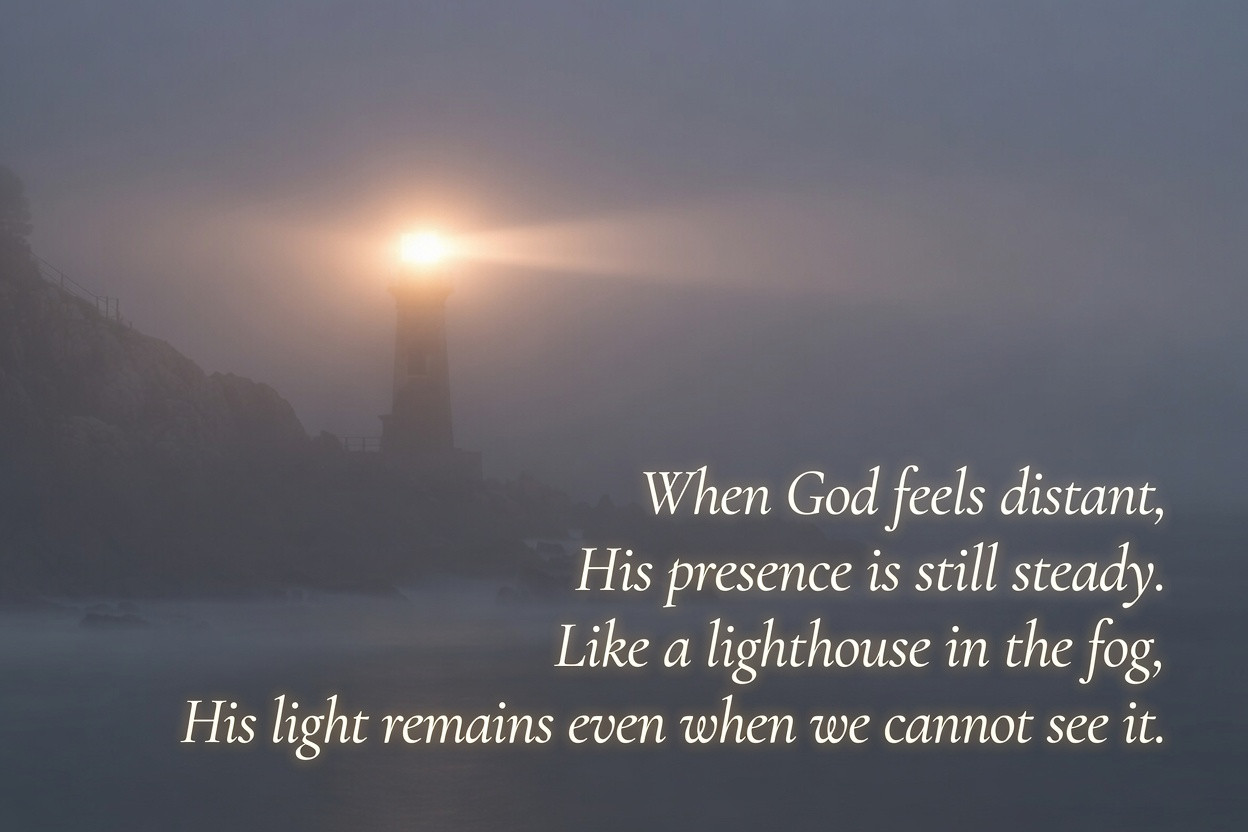
When God Feels Distant


Light in the Fog 

There are moments in life when God feels distant. Illness, loss, financial strain, and unanswered prayers can leave a believer wondering why God allows certain hardships and why His presence seems hidden. These things do not mean God has abandoned us. They mean we are walking through the kind of valleys where faith becomes quieter, deeper, and more dependent on His character rather than our feelings.

Scripture shows that God’s people have felt this way before. David called out, “Why do You hide Your face from me?” Job wondered why God seemed silent in his suffering. Their cries were not signs of weak faith. They were signs of honest faith. They brought their questions to God instead of running from Him.

When God feels absent, we need to begin by returning to Scripture. The Word steadies the mind when emotions shift. It reminds us of who God is, even when we cannot feel Him. His promises do not depend on our circumstances. They depend on Him.

This is where Hebrews 13:5,6 becomes an anchor. Verse 5 gives the promise: “I will never leave you nor forsake you.” Verse 6 gives the believer’s response: because God will not abandon us, we can say with confidence that the Lord is our rock, and we don’t need to fear what people or circumstances may do. One verse is assurance. The other is courage. Together they remind us that God’s presence is not based on emotion. It is based on His faithfulness.

Prayer becomes the next anchor. In seasons of silence, prayer is not about getting quick answers. It is about keeping the line open. We speak to God because He hears us, even when He seems quiet. Prayer steadies the heart. It keeps us from drifting into bitterness or despair. It reminds us that God’s silence is not rejection. It is often the quiet space where He teaches us to trust Him more deeply.

Community is the third anchor. When strength runs thin, believers need Christian support. God often speaks through the encouragement of others. He comforts them through their presence. He strengthens through their prayers. Hard seasons are not meant to be carried alone.

Trust grows slowly in times of hardship. It grows when we choose to believe that God is still working, even when we cannot feel His hand. It grows when we remember that His timing is not our timing and His purposes reach farther than our understanding. It grows when we hold onto the truth that God’s silence is never abandonment. It is often preparation, shaping us for something we cannot yet see.

If you feel forgotten, you are not forgotten. God is present in the quiet places. He is near in the shadows. He is faithful in the waiting. When we cannot see the way forward, His light is still guiding. When we feel overlooked, His light is still holding. When life feels dim, His light is still preparing something we cannot yet imagine. 

This is where trust becomes real. This is where faith deepens. This is where God teaches us to rely on Him more than ever before.

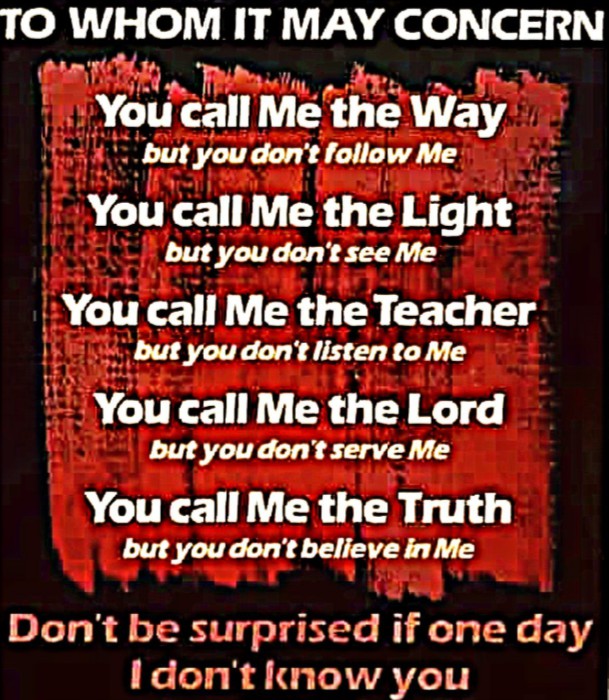
“I Never Knew You”: What Jesus Really Meant

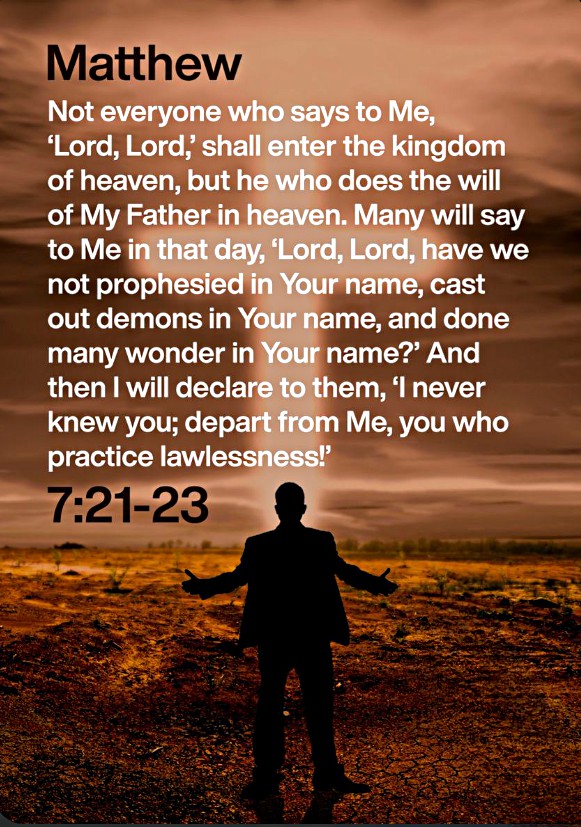
I think a lot of people misunderstand this passage. When Jesus says in Matthew 7:21 that “not everyone who says to me, ‘Lord, Lord,’ will enter the kingdom of heaven,” it is easy to hear that as “not all Christians will enter Heaven.” But that’s not what Jesus is saying. The verse does not warn true believers that they might be shut out. It warns that not everyone who claims to be a Christian actually is one.

There is a difference between professing Christ and belonging to Christ, and Jesus draws that line with unmistakable clarity.

Some people sincerely believe they are Christians but have never actually been saved. They may admire Jesus, attend church, or try to live good lives, but none of those things create salvation. And there are people who think that simply being good, even without Christ, will get them into Heaven. That is a hard pill to swallow for many, but Scripture does not teach that goodness earns eternal life.

Jesus makes this point painfully clear in verse 23. He says that many will stand before Him and say, “But we did all these good things in your name,” and His response will be, “Go away, I never knew you.” The issue is not their works. The issue is their relationship. They never accepted the blood of His sacrifice, never believed He is the only begotten Son of God, never trusted Him as Lord, never asked Him to cover their sins with His death and resurrection.

Your church membership will not get you in. Your good works will not get you in. Your moral record will not get you in. It is your relationship with Jesus that gets you in.

When Jesus says that only those who do the “will of the Father” will enter the Kingdom, He is not talking about moral achievement. He is talking about faith. He is talking about trusting Christ, receiving His sacrifice, and entering into a relationship with Him. Everything else flows from that.

In other words, without accepting the death, burial, and resurrection of Christ, without trusting that He died in your place and cleansed your sins with His blood, all the good works in the world will still fall short of Heaven. It sounds harsh, but it is biblically grounded. Good works are the fruit of salvation, not the foundation of it.

Matthew 7:21–23 is not meant to frighten believers. It is meant to expose false confidence in religion, morality, and self-effort. Jesus is calling people away from the illusion of salvation and toward the reality of it, which is a living relationship with Him.


Today in History

On July 11, 1804, Aaron Burr the sitting vice president shot and killed Alexander Hamilton in a duel known then as an affair of honor.

Duels were fairly common at the time and their rivalry went back years. In the 1796 and 1800 elections Burr and Hamilton were bitter political enemies. Hamilton publicly attacked Burr calling it a religious duty to oppose him.

The 1800 election was chaotic. Jefferson and Burr tied with 73 electoral votes each. Under the rules then the House of Representatives had to decide. After 35 ballots Federalists led by Hamilton supported Jefferson as the lesser evil. Jefferson became president and Burr vice president.

By 1804 Jefferson had dropped Burr. Burr ran for governor of New York as an independent but Hamilton campaigned hard against him and attacked his character. Burr challenged Hamilton to the duel to restore his reputation.

Accounts differ on the shots but Burr hit Hamilton in the stomach. Hamilton died the next day. Burr was later charged with treason, acquitted on a technicality and lived the rest of his life in disgrace. Hamilton’s face ended up on the ten dollar bill.

Compared to today’s elections the campaigns of the 1800s were far nastier and more violent, so far. The Constitution handled the 1800 tie and still works today.