Conversations with God VIII

There are seasons when we cannot see what is ahead, but we can still trust the One who walks with us and talks with us along the way. This is a conversation about worrying about losing your soul little by little.

Me:  Sometimes it feels like things go wrong too easily down here.

God: In the flesh, it can seem that way.

Me:  Because in the flesh good can be overcome.

God: Yes. The flesh is fragile. It gets tired. It gets discouraged.

Me:  But in the spirit, never?

God: Never. My Spirit in you is not overcome. Not intimidated. Not outmatched.

Me:  Then why does it feel like the battle is so uneven?

God: Because you are seeing the part that hurts, not the part that lasts.

Me:  I guess we do not usually lose our soul all at once.

God: No. People usually lose it little by little without realizing it.

Me:  A little compromise here.

God: A little pride there.

Me:  A little chasing of approval.

God: A little surrender of integrity.

Me:  A little neglect of what matters most.

God: And suddenly the heart feels far from where it used to be.

Me:  But You keep calling me back.

God: Always. Because your soul is worth more than anything you could gain without Me.

Me:  So the struggle is real, but the outcome is not in doubt.

God: Exactly. Pressure can trouble you, but it cannot triumph over My Spirit in you.

Me: That is hard to remember when life feels heavy.

God: That is why I remind you. Not to deny the struggle, but to steady you in it.

Me:  So, in the flesh, I may feel overwhelmed.

God: But in the Spirit, you are never overcome.

Many people feel unsettled when they sense themselves drifting. But many others do not sense it at all because the drift is small, so ordinary, so daily.

The drift is gradual. The compromises are small. The erosion quiet. The loss is incremental. Compromise. Pride. Approval. Integrity. Neglect.

It happens in moments we barely notice, choices we barely think about, and habits we never meant to form. That is why reflection matters. Not to create fear, but to keep the soul awake to what truly lasts.

Jesus warned about the danger of losing the soul, and Scripture shows that it is often lost through small trades that seem harmless at the time. The drift is subtle, but so is the grace that keeps calling us back.

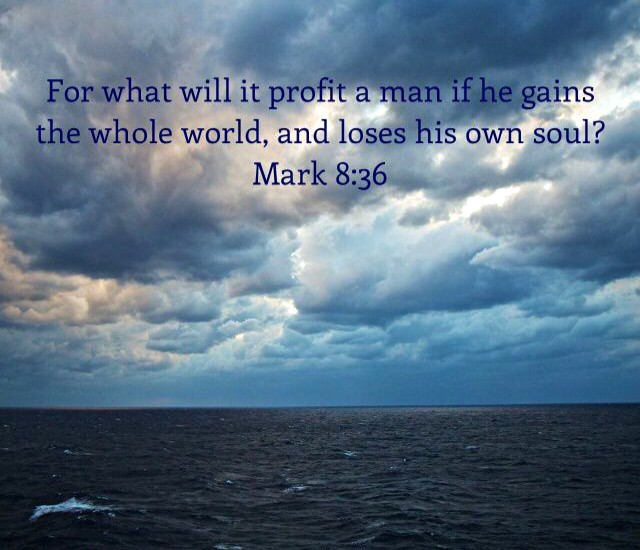
This Conversation is not meant as God’s literal speech. It reflects how Scripture portrays God’s steadiness in times of moral confusion and spiritual pressure. What will it profit a man if he gains the whole world and loses his own soul? The Bible never promises a world without struggle, but it does promise a God who keeps calling us back before we slip too far.

Conversations with God VII

There are seasons when we can’t see what’s ahead, but we can still trust the One who walks with us and talks with us along the way. This is a conversation about worrying about evil.

Me:  Sometimes it feels like evil wins too easily down here.

God: In the flesh, it can seem that way.

Me:  Because in the flesh, evil can overcome good.

God: Yes. The flesh is fragile. It gets tired. It gets discouraged.

Me:  But in the spirit, never?

God: Never. My Spirit in you is not overcome. Not intimidated. Not outmatched.

Me:  Then why does it feel like the battle is so daunting?

God: Because you’re seeing the part that hurts, not the part that lasts.

Me:  So the struggle is real, but the outcome isn’t in doubt?

God: Exactly. Evil can press you, but it cannot possess you. It can trouble you, but it cannot triumph over My Spirit in you.

Me:  That’s hard to remember when life feels heavy.

God: That’s why I remind you not to deny the struggle, but steady you in it.

Me:   So, in the flesh, I may feel overwhelmed?

God:  But in the Spirit, you are never overcome.

Many people feel unsettled when they see evil gaining ground or when the world feels darker than it used to. This Conversation reminds us that Scripture consistently shows God present in the struggle between flesh and spirit. Fear grows when we focus only on what the flesh feels. Our faith grows when we remember the One who lives within us. The believer may feel overwhelmed, but they are never overcome.

This Conversation is not meant as God’s literal speech. It reflects how Scripture portrays God’s steadiness in times of moral confusion and spiritual pressure: “Walk in the Spirit,” “Do not be overcome by evil,” “The Lord is my light and my salvation.” The Bible never promises a world without struggle, but it does promise a God whose Spirit is stronger than anything that comes against us.

A Comforting Dream

A couple of mornings ago, I had a dream. Nothing unusual about that. I dream all the time and remember parts of them. Heck, I sometimes have serial dreams, like the Twilight Zone episode “Perchance to Dream.” Poor Edward Hall’s dream continues each night, each one taking him closer to his death, and then it does. That is off topic, but it popped into my mind. Mine are never terrorizing, and sometimes they are just nonsensical.

The one I am really writing about is different.

For context, I once made my wife promise she would not die before me. I know she cannot control that, it’s just my preference to go first. In this dream, it was like God was there. It was comforting. Never happened before. I was putting together something for Sunday, the Conversations with God series, and He was helping, but not exactly. It was finished. I woke up thinking all I had to do was copy and paste. It was all in the dream. But there was nothing to copy and paste. I would have to write from memory.

The Bible says older men will dream dreams and younger men will see visions. I qualify as older, seventy-four in September. The dream may have taken place in the not-too-distant future or far into the future. It was about my wife and me being together for eternity, first me, then her. I know the Bible says husbands and wives are together until death, but then you get into the idea of being born again. A couple’s marriage cannot be separated by what men do, but if a couple is born again, why not stay together? Jesus said He would prepare a place for us. Maybe that is what I was thinking of.

Scripture never tells us to treat every dream as prophecy. And this was a dream. I really just want to relate it, not turn it into a Bible lesson or a theological debate. At the end of the dream, I felt a deep sense of peace and comfort. There was a light, not a white light or anything dramatic, just a comforting, warming glow. Off in the distance were two children. They were waving. Crying too, I think, but tears of sadness and tears of joy, maybe both.

It is difficult to put the next part into words because I do not have the right words for a soft, comforting voice that called to them, “Do not be afraid. I am taking Grandma to be with Grandpa, where they will be waiting for you.”

So not every dream has a message, but that does not make the dream meaningless. I told it to my wife, and she said little except that it was just a dream. But to me, it does show that God can use dreams to comfort, steady, or reassure a person. It comforted me.

At the end, off in the distance, the two children were still waving, maybe with tears in their eyes, and God’s beautiful voice called again, “Do not be afraid.”

That is not theology. That is comfort.

It is the heart’s way of saying love is not lost, separation is not the end, reunion is real, and God holds the whole family story.

NATO: Is It Still Relevant? [revised]

[I wrote this three years ago and updated it today based on the Iranian Conflict. I do it because I see no major changes coming.]

The North Atlantic Treaty Organization (NATO) currently has 32 member countries united by the motto “All for one, one for all,” reminiscent of the Three Musketeers. However, this alliance raises concerns: some members are unstable and could provoke attacks that others would be obligated to defend, while certain nations harbor animosity toward the U.S. Recently, Denmark got into a spat with the U.S. over Greenland, with Washington threatening to take control “whether they like it or not,” straining ties within the alliance. Why should the U.S. be bound to defend every member? At the onset of the Cold War, NATO served a purpose, but that era has long since ended.

The principle of collective defense, enshrined in Article 5, which declares an attack on one as an attack on all, sounds noble, but does it hold up? On September 11, 2001, terrorists struck the United States, and while most NATO allies contributed to the response, participation was uneven. The U.S. deployed over 1 million troops, while the rest of NATO sent 300,000, despite Europe’s NATO countries having a combined population nearing 1 billion, dwarfing the U.S. population of roughly 340 million. Some members sent no troops, and Canada cut and ran in 2011; so much for solidarity.

Take Norway, an original NATO signatory, which offered a weak excuse for denying fuel to a U.S. vessel. Or consider Turkey: in 2003, it barred American troops from using its territory as a staging ground for the Iraq invasion. Does anyone honestly believe Turkey would rush to America’s aid in a crisis?

Here’s another twist, contrary to common belief: While the UK and France were in NATO, both were once part of the now-defunct Southeast Asia Treaty Organization (SEATO), yet neither sent troops to Vietnam. The U.S., meanwhile, sacrificed over 58,000 young lives in that conflict. NATO members have only recently started meeting the alliance’s old defense spending target of 2% of GDP, mostly under pressure from ongoing threats like Russia’s war in Ukraine, but that’s yesterday’s benchmark. Now there’s a new push for 3.5% on core defense by 2035 as part of a 5% total on defense and security, and only a handful, like Poland, Lithuania, and Latvia, are hitting that mark. The rest are still effectively freeloading off U.S. military might, with America accounting for over 60% of the alliance’s total spending despite the population imbalance. This imbalance undermines NATO’s strength.

The alliance is increasingly obsolete in a world shaped by new powers like China and other parts of Asia, as well as evolving problems in the Middle East, Africa, and South America. Look at the ongoing mess with Iran in 2026: The U.S. and Israel launched massive strikes starting February 28 under Operation Epic Fury, taking out Supreme Leader Ali Khamenei and hitting nuclear sites, missile facilities, air defenses, and other military targets across Iran to degrade its nuclear and ballistic capabilities and push for regime change. Iran retaliated with waves of missiles and drones targeting U.S. bases, Israel, and Gulf allies, closing parts of the Strait of Hormuz and escalating regionally, including strikes that drew in places like Cyprus and even a missile intercepted over Turkey by NATO air defenses.

NATO? Nowhere to be seen as a collective force. Secretary General Mark Rutte explicitly stated that NATO “is not involved” and there are “absolutely no plans” for the alliance to get dragged in, though he praised the U.S.-Israeli actions for degrading Iran’s threats and noted individual allies might provide enabling support like logistics or intercepts. Sure, NATO systems shot down a stray Iranian missile heading toward Turkey, and the alliance adjusted postures for potential threats, but that’s defensive housekeeping, not stepping up offensively or committing troops when America shoulders the main burden yet again. This hands-off approach in a major Middle East crisis outside Europe’s borders highlights how NATO remains Eurocentric and unwilling (or unable) to mobilize for U.S.-led operations beyond its traditional turf.

Leaving NATO would allow the U.S. to make custom deals with nations rather than sticking to an outdated setup. We would be free to tailor partnerships with individual nations. The current setup risks entangling the U.S. in unwanted conflicts, think of Turkey’s regional disputes or the recent addition of Finland and Sweden, whose proximity to Russia could spark trouble, especially with Moscow’s forces still bogged down in Ukraine.

Exiting NATO would let the U.S. sidestep these time bombs and focus on defending our interests on our own terms. In short, we don’t need it anymore.

Conversations with God VI

God finishes what our love begins.

There are seasons when we can’t see what’s ahead, but we can still trust the One who walks with us and talks with us along the way. This is a conversation about worrying about how we did as parents.

Me:  I think about my parenting sometimes, and I wonder if what I did was enough. I tried. I cared. I meant well. I planted what I could with the strength I had. But I may never get to see the fullness of the seeds I planted, and that leaves me unsure.

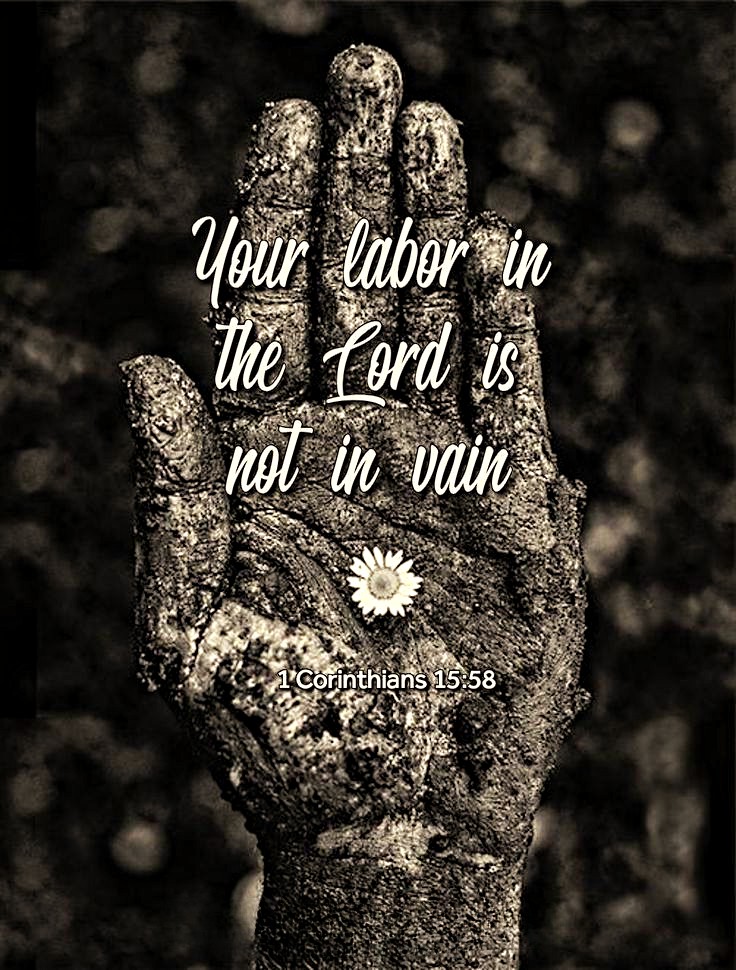
God: The work you did was not wasted. Love that costs something is never wasted. The dirt on your hands was not failure. It was evidence of faithfulness. You showed up with a sincere heart, even on the days you felt tired, overwhelmed, or afraid.

Me:  But I don’t know how it will all turn out. I may not live long enough to see the harvest of my work, whether my work was good or bad.

God: Most seeds grow in hidden places. Most roots strengthen long before anything breaks the surface. And many harvests come in seasons the planter never sees. Nothing planted in love disappears. I tend what you began.

Me:  So even if I never see the results, You’re still working.

God: Yes. Your labor was not in vain. Your love continues in ways you cannot measure. And where your strength ended, My care continued. Trust Me with the chapters you won’t be here to read.

This Conversation is not meant as God’s literal speech. It reflects how Scripture portrays how God works for those who trust Him. God finishes what our love begins. It’s a reminder that the work of love is slow, often hidden, and never wasted, and that the God who sees the seeds also tends the harvest.