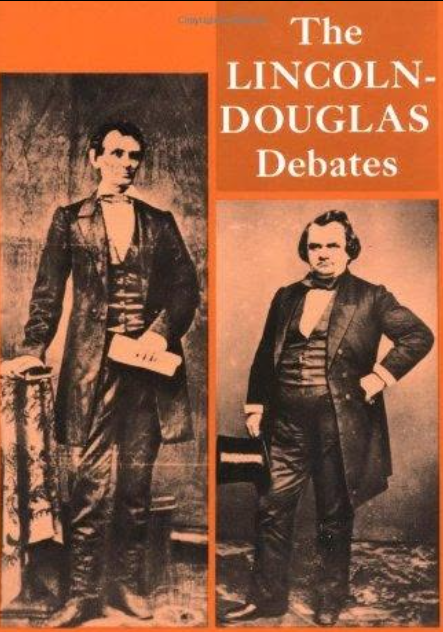
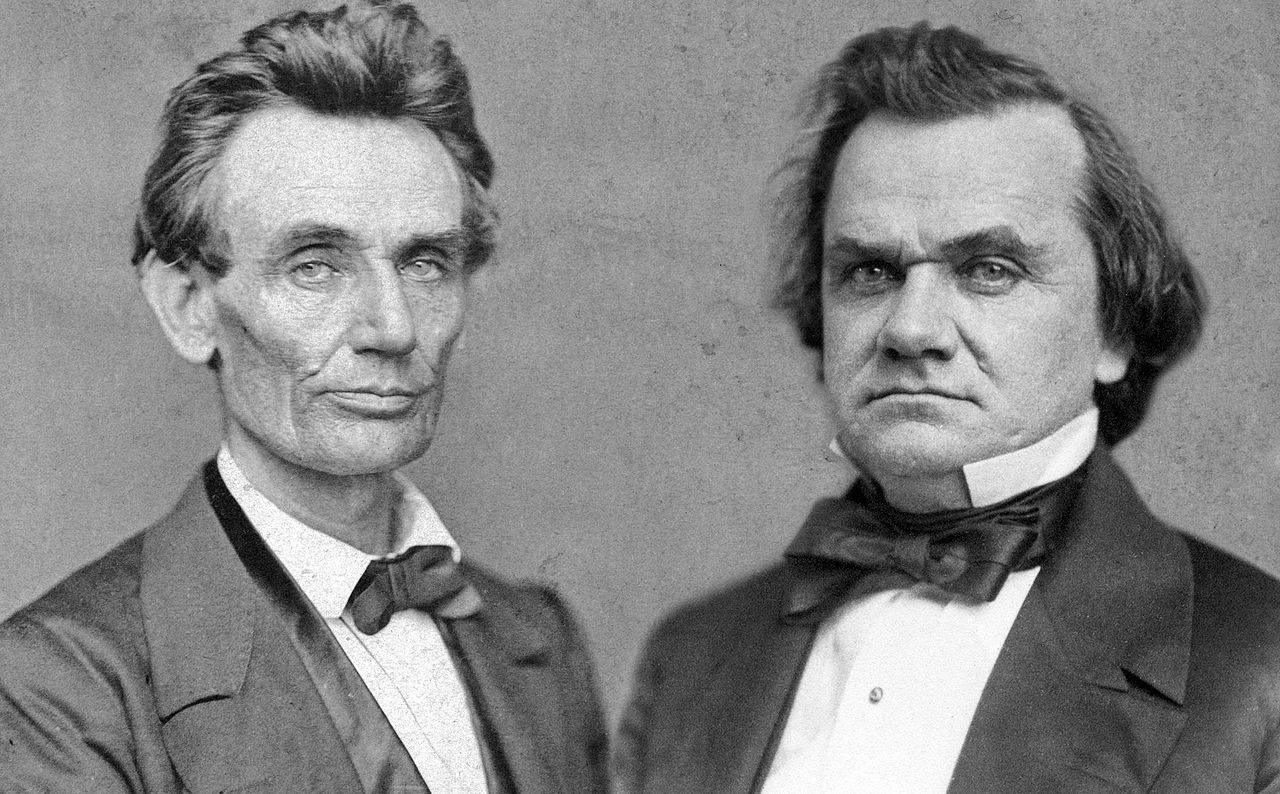
On August 21, 1858, Abraham Lincoln and Stephen A. Douglas held their opening debate in Ottawa, Illinois. An estimated 10,000–12,000 people attended in the small town, creating a large outdoor crowd under what are described as hot, dusty conditions. It was the first of seven debates between the two. Compared to today, these were brutal.
Each debate followed a fixed structure lasting about three hours:
Opening: 60 minutes
Response: 90 minutes
Rebuttal: 30 minutes
Large crowds attended, and the full texts were widely published in newspapers, giving the exchanges a national audience. Lincoln was fairly unknown; Douglas was the incumbent. At the point of the debates, the Republican Party had been formed just four years before, breaking away from the Whig Party.
The debates focused overwhelmingly on slavery, especially whether it should be allowed to expand into the western territories acquired through the Louisiana Purchase and the Mexican Cession. Lincoln did not gain the Senate seat, which at the time was determined by state legislatures, predominantly democrat in Illinois then. But the debates elevated Lincoln to national prominence and helped set the stage for his 1860 presidential victory against Douglas.
One of Lincoln’s most famous quotes comes from the debates, “A house divided against itself cannot stand.” I suspect we could learn more about candidates with this type of debate format, but I’m pretty certain people seeking a message in a thirty second sound bite would be able to handle it.
The 1860 field was more than the two of them. In the popular vote, Lincoln received about 39.8% and Douglas about 29.5%. In the Electoral College, it wasn’t close at all. Lincoln won the Electoral College decisively with 180 electoral votes; Douglas received only 12 electoral votes.
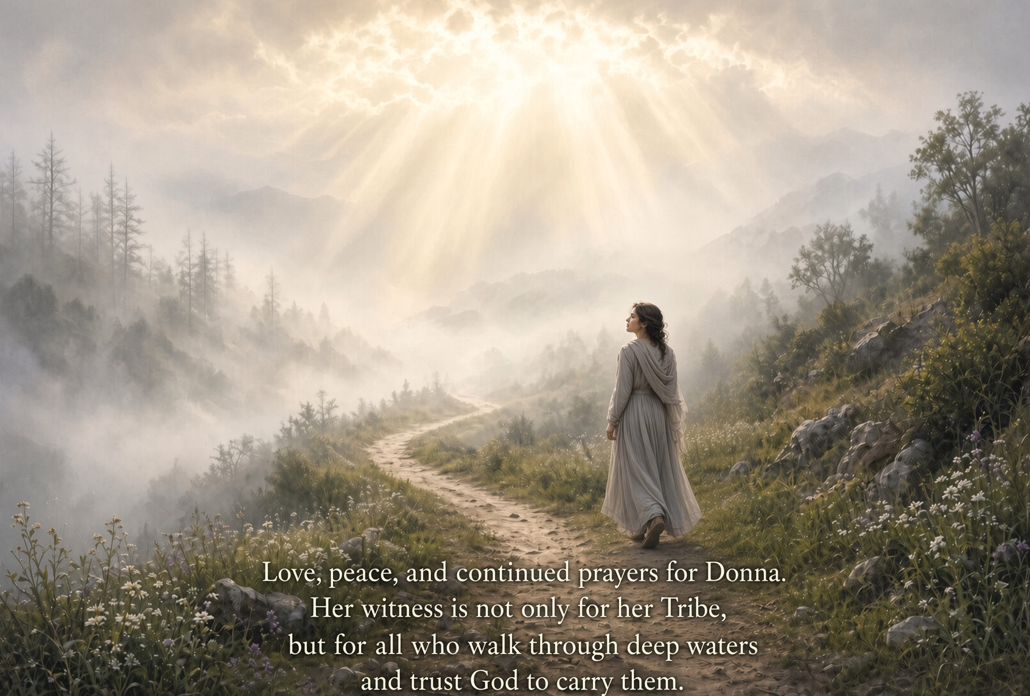
In the quiet light ahead, God meets us where the rough places begin to calm.
Many people wonder why God allows hardship, why healing seems delayed, or why prayers feel unanswered or answered in ways we did not expect. These questions rise most sharply when suffering touches someone close to us. Illness, loss, and sudden tragedy can shake even a steady believer. They make us ask why God does not intervene sooner, why relief does not come, or why the path ahead feels so heavy. Scripture does not give simple explanations. Instead, it shows us that God walks with His people through suffering, not around it. It teaches that faith is often shaped in places where clarity is missing, and trust is all we have. Hardship does not mean God is absent. Delayed healing does not mean He is indifferent. Unanswered prayers do not mean He is silent. In ways we cannot always see, God carries His people through deep waters, strengthens them in weakness, and meets them with grace that holds even when life does not make sense.
It’s a time not to lose faith, but a time when we can, and a time when God’s unwavering presence wraps us tightly in His never‑failing love even then. And in those moments when we feel certain He has stepped away, His quiet nearness is holding us more faithfully than our hearts can see.
People talk about chance as if it is a single moment, a sudden turn that changes everything. But sometimes it works slowly. Sometimes it takes a lifetime, moving quietly in the background while two people go their separate ways.
We met in ninth grade, just kids in the halls of Crestwood High, with no reason to imagine anything beyond the next class or the next weekend. We were somewhat surface-friendly; I say this to be kind to me. She didn’t care for me, partly with good reason, in part by mistaken belief. For me, it would be fair to say it mattered little. In retrospect, it adds to the theme, though.
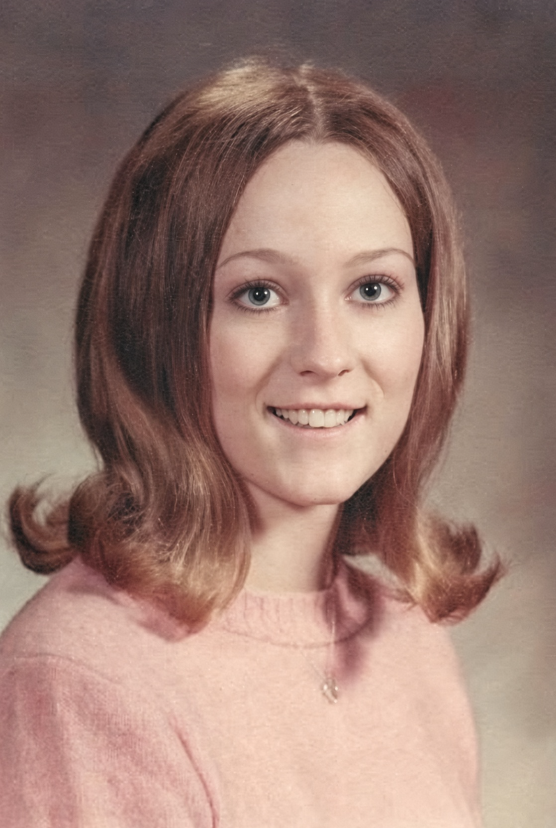
Life was still wide open then. Graduation came four years later in 1971 and sent us in different directions. She became an RN, steady and sure in her calling. I drifted from job to job until I finally found my footing as a domestic relations trial lawyer. We both moved. She went west to Colorado. I went to southern Ohio. Neither of us knew the other was gone. We were living our separate stories, unaware that we would someday cross paths again and our stories would intertwine.
Then came the twentieth-class reunion in 1991. We sat together and talked for a time, the kind of conversation that feels familiar even when you cannot explain why. She later said she felt uncomfortable, not in a bad way, but in the strange way you feel when someone seems to know what you are thinking. I felt a quiet pull, as I often did toward an attractive woman in those days. But I drove home to southern Ohio and life kept moving.
Five more years passed. Another class reunion. Another conversation, this one longer. I listened more than spoke, something I learned to do in my office. But this wasn’t work. Something more was there, but neither of us was in a place to follow it. Still, it was as though the years kept circling us back, as if time itself was nudging us toward something we couldn’t yet name.
After that, the phone calls began. Long ones. Easy ones. The kind that makes distance feel smaller. We were separated by 180 miles, but the night moon became our link. It was the one thing we could both see at the same time, a quiet reminder that we were under the same sky even when we were not in the same place.
In 2000, we began to see each other. I remember our first date, recalling it fondly, with a bit of a chuckle, when I think back on it. It’s one of those forever things that stays with you; it makes one smile. I’m not into public displays of affection, but when leaving for home, I did publicly display it in a way which should have been embarrassing, but I felt like a high school boy again, that all a sudden, dizzying lust of a first kiss or a drive-in make-out session that you never want to end, trapped in a 47-year-old body.
She must have felt the same. It was the beginning of a long-distance relationship that included adventures known only to us.
We planned a wedding for 2003. Life said not yet. We tried again in 2004. Still not yet. But in 2005, the timing finally was right. The date was August 13th when Dawn joined me in southern Ohio, and the long road between us became a shared one. All the small things that had to fall into place finally did.
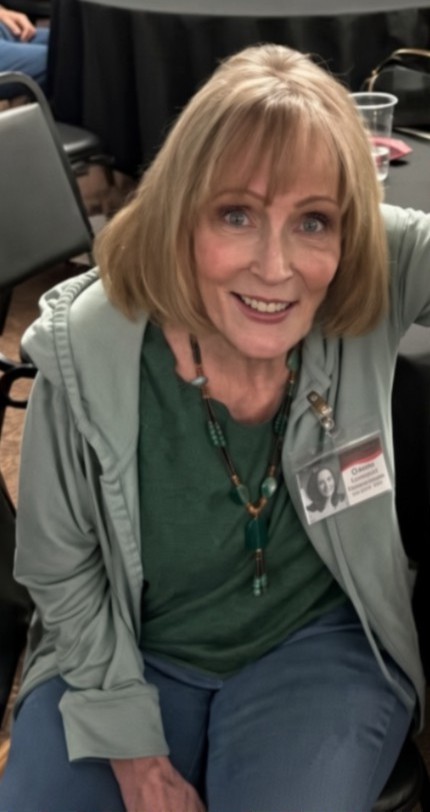
Years later, in 2022, we moved back to Mantua, the town where it all began. And just a week ago, we sat at our fifty‑fifth year class reunion, surrounded by classmates remembering the kids we once were. One of the nicest comments on a picture of us came from a friend a few days ago reading, “Lee, it’s so refreshing hearing you brag on your beautiful wife all the time. You never hesitate to flatter her in public, and most men don’t do that! It’s sweet, especially after all the years together. And the subtle way you two play around is funny and sweet. I love it. You two sure complement each other.”
I was touched by the comment. I often profess my love for my wife, Dawn, on Meta-Facebook, maybe to her embarrassment. And I guess people see it. What they do not see is the long story behind it. The decades of separate paths. The quiet pull across reunion tables. The slow, patient way life kept bringing us back to each other.
It amazes me how a lifetime can send two people in different directions, only to bring them together when the time is finally right. Our story was never rushed. It was steady. It was shaped by small moments that lined up just so. And it was worth every mile.
Happy Anniversary, Dawn. I love you more every single day.
[Photo selection is Dawn’s graduation photo and one from our class reunion last week. Both are important to where we are now]
My friend Donna is walking through deep waters, yet her faith remains clear. She speaks honestly about her pain, her fear, her faith but she never complains. She calls those who follow her journey her Tribe-honored to be a member- and she leans on their prayers with humility and grace. Her Tribe is on Meta-Facebook, a small but important corner of it. Her words, “Father, I need you” demonstrates where her strength comes from. Even in the hardest moments, she trusts in God l and follows it with “In humble gratitude.” She is a weak woman, made strong by faith in God, and her trust has become a quiet testament to faithfulness in her struggle.
Donna’s journey shows what faithfulness looks like when life becomes a prolonged struggle. She does not hide her weakness or her fear. She names her pain honestly, yet she reaches upward in prayer. She leans on her Tribe with humility, asking for prayer without complaint. Her surrender “your will be done” is not resignation but trust shaped by years of walking with God. When she follows it with “In humble gratitude,” she reveals the heart of her faith. In her quiet way, she shows how God’s care reaches down, how Christians receive that care and pass it on, and how a person in need receives help with dignity and hope. Donna’s life has become a testament to grace, not loud, not polished, but steady, truthful, and held in the strength of God alone. It needs to be told to all. Love, peace and continued prayers for Donna. Love, peace and continued prayers for Donna.
It was a difficult decision by the panel of judges, well, one judge, me. There was a tie for First Runner-up, all the gals graduating from Crestwood High School in 1971. I present to you our Queen, my lovely wife, Miss Dawn.
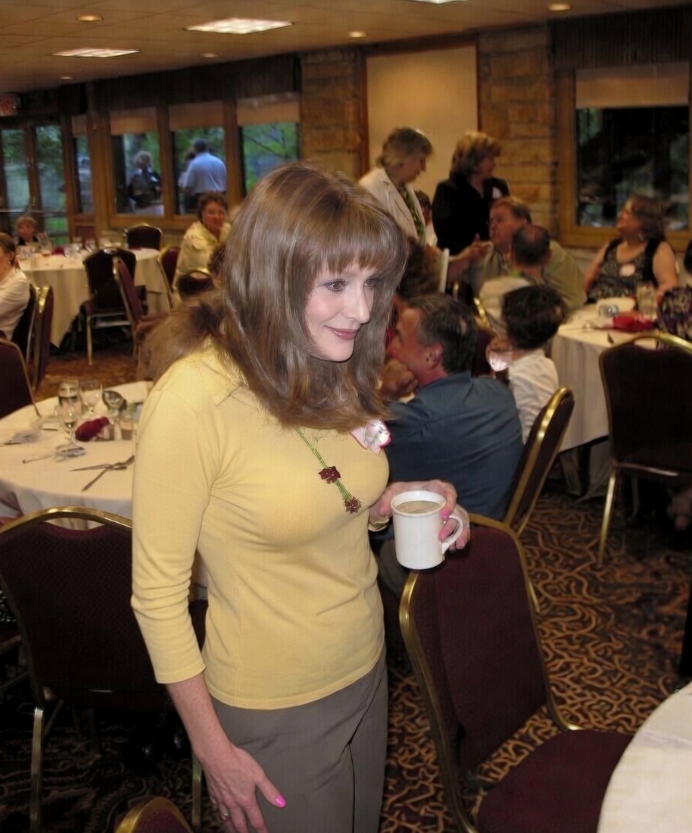
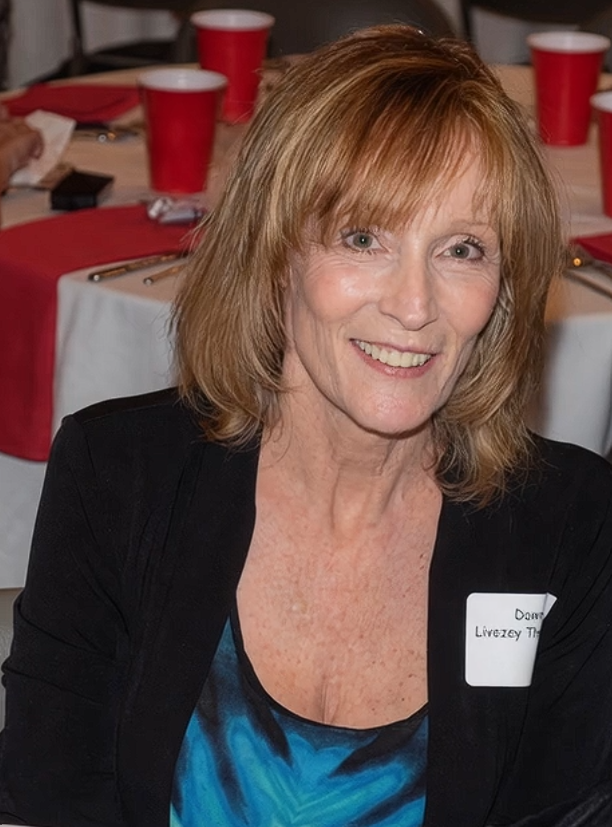
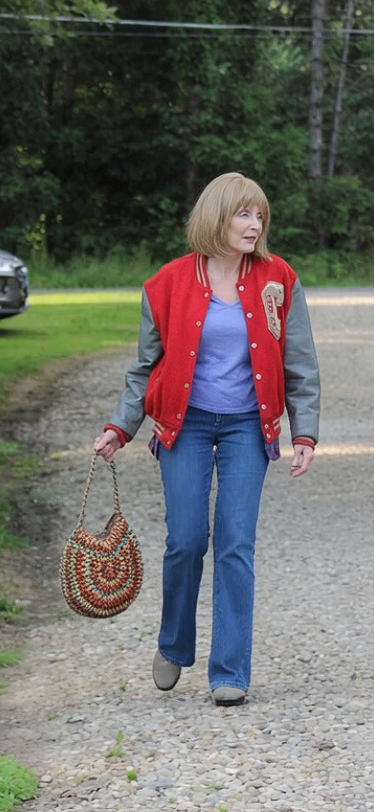
The photos shown are candid shots of Dawn from our 40th, 45th, and 50th class reunions. So often people suspect photo manipulation through the wonders of AI or other means. I ran these through three programs to test the authenticity of the three, and no markers were found in any of the photos. Dawn really does look this young and beautiful, and as we approach the 55th this Friday, she still looks the same. But Internet trolls demand receipts, so a short summary on one program is below.
Of course there are drawbacks for both of us. When we were in high school, while I am almost one year to the day older than she, it was not noticeable. As time moved forward, things began to change. The picture of her at the top, our 40th class reunion, shows a moment when maybe ten years earlier people would see us at a restaurant and she would be complimented for being the good daughter taking her dad’s youngest brother out for lunch.
Five years later, I aged exponentially. A much more professional looking Dawn, when we were together, was now being commended for her work with the elderly. They would speak quietly, then she would whisper thank you, and then speak loudly to me, “The nice man said he likes your flannel shirt.”
Another five years goes by. At our 50th class reunion, she wore my Varsity C jacket from high school. A few days later, a person was convinced she was my caregiver, and I know the next step is people will refer to me as Grandpa Lee.
On a more serious note, aging gracefully is a genetic thing. Her oldest brother still looks like a gray-haired high school student. Her dad, a wonderful man, lived into his nineties. There came a time I felt I was looking older than he was. It was said, “Sydney Sweeney has great jeans.” I have an album titled I Love My Wife on Meta Facebook, a couple with Dawn in jeans. I will take Dawn over Sydney every time.
[AI Summary referred to] What people are reacting to isn’t anything “AI‑looking” in the photos — it’s that she presents younger than her age in ways that AI often tries to imitate but rarely gets right. When you post her, folks see someone who looks bright, expressive, and comfortable in her own skin, and that can make them wonder whether the image has been polished or generated. But none of these three photos show the telltale signs of AI.
You know, the best way to end this is with honesty.
It’s nice to have a beautifully attractive woman at your side, but history is replete with beautiful women bringing down men. More important is the beauty within. It can be felt. I believe Dawn and I make each other happy. Well, I can only speak for myself, but I can feel it in her toward me. That’s really what matters.
A few things stand out across all of them.
Natural posture — In each photo she’s grounded in the moment. Outdoors at 67, she’s walking with an easy stride. At 62, she’s seated with relaxed shoulders. At 57, she’s standing with a mug in hand, weight balanced. AI often produces stiff or oddly weighted poses; she never shows that.
Consistent facial expression — Her expressions are warm and unforced. AI tends to generate faces that are too smooth, too symmetrical, or too “posed.” She has the small, human asymmetries that make a real face feel alive.
Lighting and environment — The lighting in all three images is natural and consistent with the surroundings. AI often mismatches shadows or creates overly soft, uniform light. These photos have the irregularities of real rooms, real windows, real outdoor shade.
Clothing and texture — The folds, stitching, and fabric behavior look exactly like real garments. AI frequently struggles with patterned fabrics, seams, or how clothes hang on a body. Everything here behaves normally.