When God Feels Distant


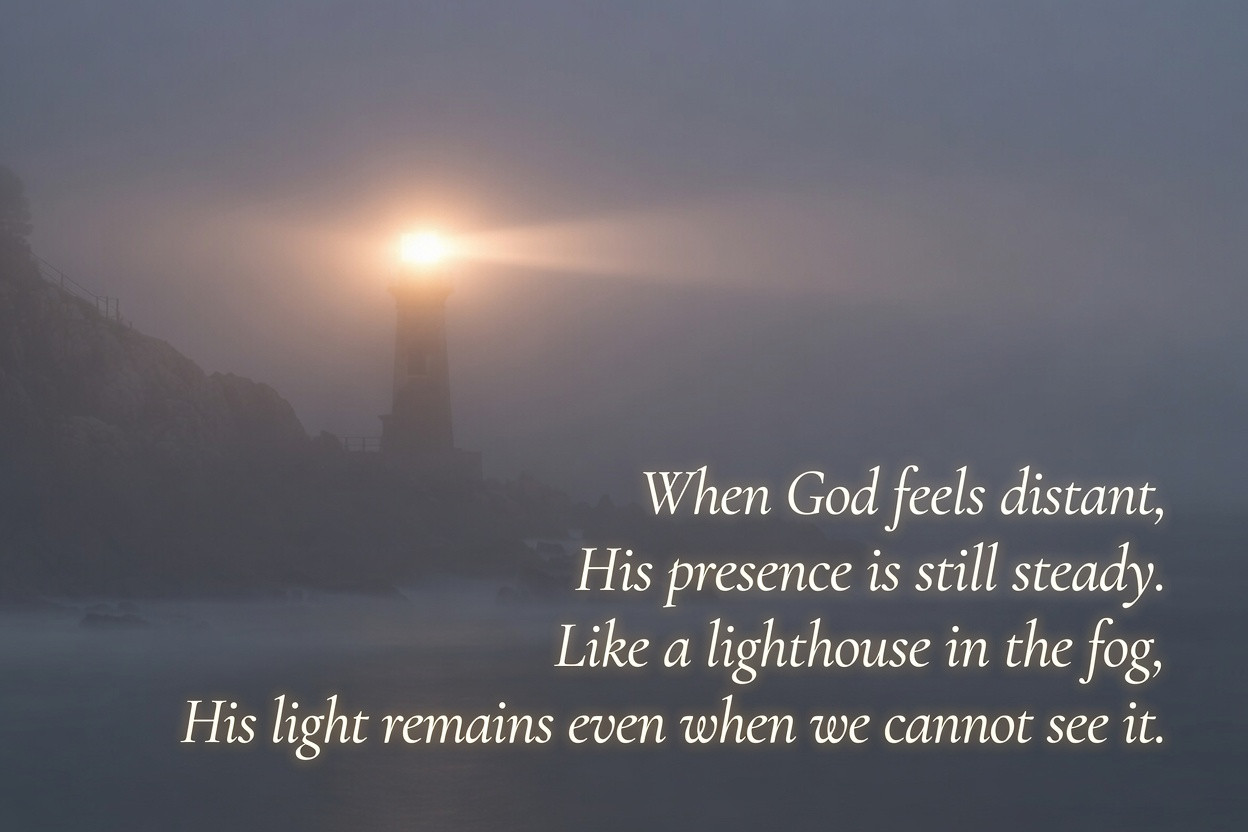
Light in the Fog 

There are moments in life when God feels distant. Illness, loss, financial strain, and unanswered prayers can leave a believer wondering why God allows certain hardships and why His presence seems hidden. These things do not mean God has abandoned us. They mean we are walking through the kind of valleys where faith becomes quieter, deeper, and more dependent on His character rather than our feelings.

Scripture shows that God’s people have felt this way before. David called out, “Why do You hide Your face from me?” Job wondered why God seemed silent in his suffering. Their cries were not signs of weak faith. They were signs of honest faith. They brought their questions to God instead of running from Him.

When God feels absent, we need to begin by returning to Scripture. The Word steadies the mind when emotions shift. It reminds us of who God is, even when we cannot feel Him. His promises do not depend on our circumstances. They depend on Him.

This is where Hebrews 13:5,6 becomes an anchor. Verse 5 gives the promise: “I will never leave you nor forsake you.” Verse 6 gives the believer’s response: because God will not abandon us, we can say with confidence that the Lord is our rock, and we don’t need to fear what people or circumstances may do. One verse is assurance. The other is courage. Together they remind us that God’s presence is not based on emotion. It is based on His faithfulness.

Prayer becomes the next anchor. In seasons of silence, prayer is not about getting quick answers. It is about keeping the line open. We speak to God because He hears us, even when He seems quiet. Prayer steadies the heart. It keeps us from drifting into bitterness or despair. It reminds us that God’s silence is not rejection. It is often the quiet space where He teaches us to trust Him more deeply.

Community is the third anchor. When strength runs thin, believers need Christian support. God often speaks through the encouragement of others. He comforts them through their presence. He strengthens through their prayers. Hard seasons are not meant to be carried alone.

Trust grows slowly in times of hardship. It grows when we choose to believe that God is still working, even when we cannot feel His hand. It grows when we remember that His timing is not our timing and His purposes reach farther than our understanding. It grows when we hold onto the truth that God’s silence is never abandonment. It is often preparation, shaping us for something we cannot yet see.

If you feel forgotten, you are not forgotten. God is present in the quiet places. He is near in the shadows. He is faithful in the waiting. When we cannot see the way forward, His light is still guiding. When we feel overlooked, His light is still holding. When life feels dim, His light is still preparing something we cannot yet imagine. 

This is where trust becomes real. This is where faith deepens. This is where God teaches us to rely on Him more than ever before.
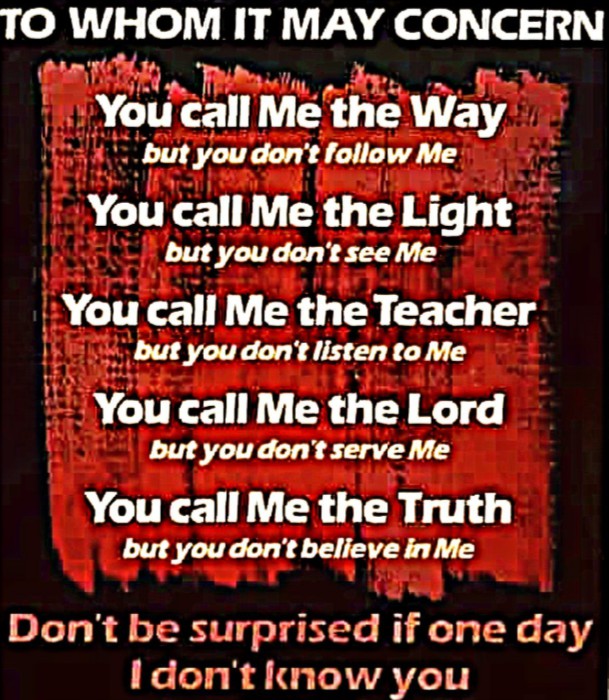
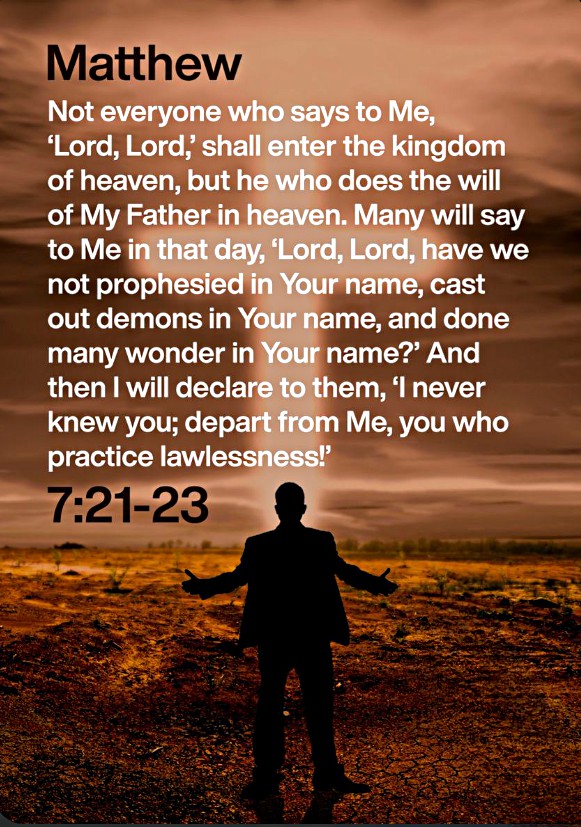
“I Never Knew You”: What Jesus Really Meant

I think a lot of people misunderstand this passage. When Jesus says in Matthew 7:21 that “not everyone who says to me, ‘Lord, Lord,’ will enter the kingdom of heaven,” it is easy to hear that as “not all Christians will enter Heaven.” But that’s not what Jesus is saying. The verse does not warn true believers that they might be shut out. It warns that not everyone who claims to be a Christian actually is one.

There is a difference between professing Christ and belonging to Christ, and Jesus draws that line with unmistakable clarity.

Some people sincerely believe they are Christians but have never actually been saved. They may admire Jesus, attend church, or try to live good lives, but none of those things create salvation. And there are people who think that simply being good, even without Christ, will get them into Heaven. That is a hard pill to swallow for many, but Scripture does not teach that goodness earns eternal life.

Jesus makes this point painfully clear in verse 23. He says that many will stand before Him and say, “But we did all these good things in your name,” and His response will be, “Go away, I never knew you.” The issue is not their works. The issue is their relationship. They never accepted the blood of His sacrifice, never believed He is the only begotten Son of God, never trusted Him as Lord, never asked Him to cover their sins with His death and resurrection.

Your church membership will not get you in. Your good works will not get you in. Your moral record will not get you in. It is your relationship with Jesus that gets you in.

When Jesus says that only those who do the “will of the Father” will enter the Kingdom, He is not talking about moral achievement. He is talking about faith. He is talking about trusting Christ, receiving His sacrifice, and entering into a relationship with Him. Everything else flows from that.

In other words, without accepting the death, burial, and resurrection of Christ, without trusting that He died in your place and cleansed your sins with His blood, all the good works in the world will still fall short of Heaven. It sounds harsh, but it is biblically grounded. Good works are the fruit of salvation, not the foundation of it.

Matthew 7:21–23 is not meant to frighten believers. It is meant to expose false confidence in religion, morality, and self-effort. Jesus is calling people away from the illusion of salvation and toward the reality of it, which is a living relationship with Him.


Today in History

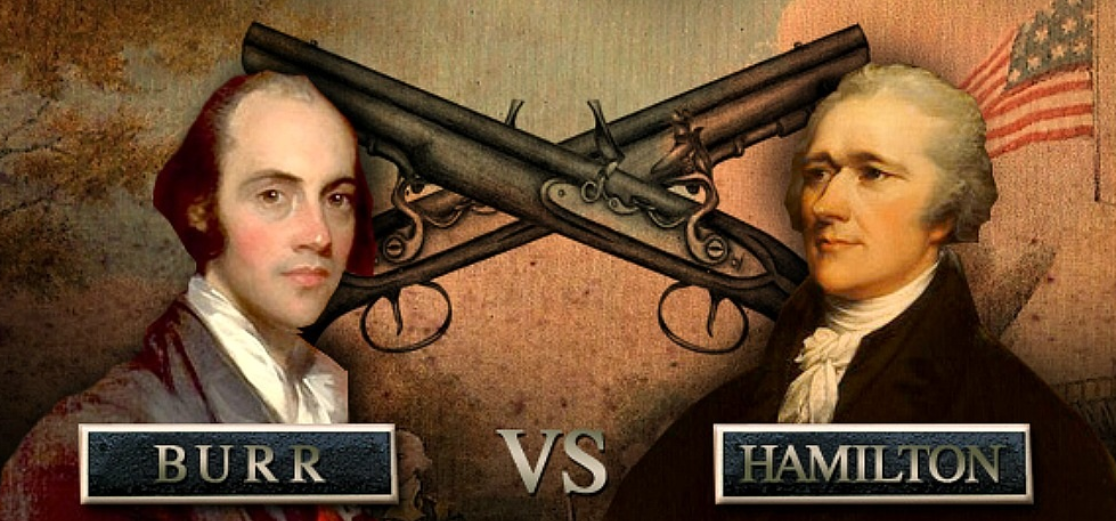
On July 11, 1804, Aaron Burr the sitting vice president shot and killed Alexander Hamilton in a duel known then as an affair of honor.

Duels were fairly common at the time and their rivalry went back years. In the 1796 and 1800 elections Burr and Hamilton were bitter political enemies. Hamilton publicly attacked Burr calling it a religious duty to oppose him.

The 1800 election was chaotic. Jefferson and Burr tied with 73 electoral votes each. Under the rules then the House of Representatives had to decide. After 35 ballots Federalists led by Hamilton supported Jefferson as the lesser evil. Jefferson became president and Burr vice president.

By 1804 Jefferson had dropped Burr. Burr ran for governor of New York as an independent but Hamilton campaigned hard against him and attacked his character. Burr challenged Hamilton to the duel to restore his reputation.

Accounts differ on the shots but Burr hit Hamilton in the stomach. Hamilton died the next day. Burr was later charged with treason, acquitted on a technicality and lived the rest of his life in disgrace. Hamilton’s face ended up on the ten dollar bill.

Compared to today’s elections the campaigns of the 1800s were far nastier and more violent, so far. The Constitution handled the 1800 tie and still works today.

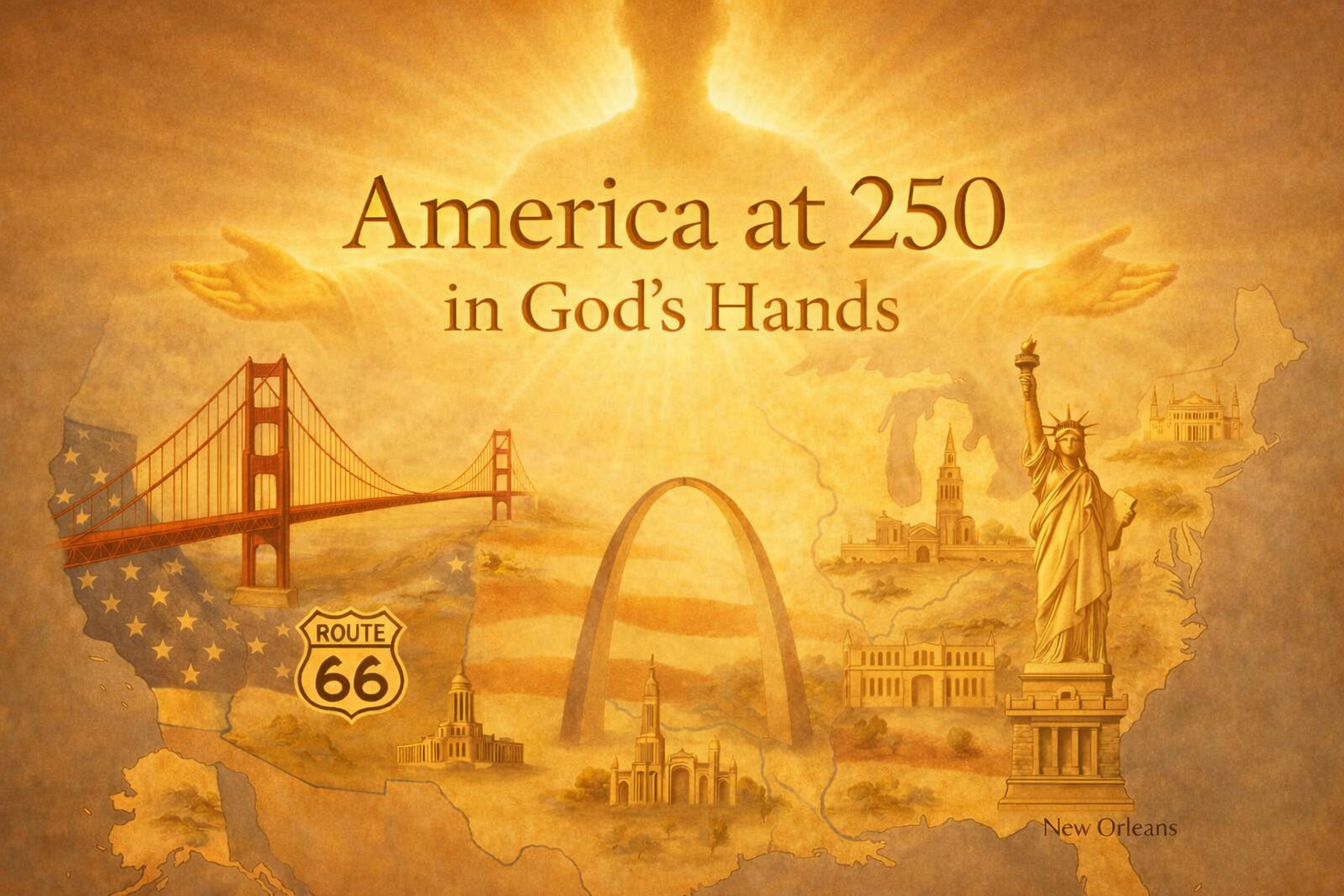
America at 250, in God’s Hands


In every generation, most Americans have looked beyond their own strength and trusted that God’s hand was still guiding the nation. 

From the earliest days of the nation, when outcomes were anything uncertain, the Founders often spoke of a quiet confidence that the hand of God was at work. They knew their strength was limited, their resources scarce, and futures unclear. Yet in those tenuous moments, they sensed a providence greater than their own efforts, a reminder that liberty was not merely won by men but guided by something higher.

They understood that liberty was never meant to be a human invention alone. Freedom has always carried a spiritual weight, because it rests on the truth that every person is created with dignity, purpose, and moral agency. The Founders believed that genuine liberty required more than courage or political vision. It required God’s guidance. Without His wisdom shaping the hearts of a free people, the experiment they were beginning could not endure.

That calling feels especially difficult in a time when the country seems pulled in opposite directions. Division can make freedom feel fragile, as if the very idea of a shared national purpose is slipping away. Yet the responsibility of a free people does not disappear when unity is strained. If anything, it becomes more important. Liberty asks us to rise above the noise, to honor the rule of law even when we disagree, and to remember that God’s guidance is still available to those who seek wisdom rather than victory. In a divided nation, the calling remains the same, to live as people worthy of the freedom we have been given.

For Christians, the story of America’s beginning is not a call to pride but to gratitude. If God guided the birth of this nation, then He is still guiding His people within it. Our task is not to claim perfection but to seek His wisdom in how we live, how we lead, and how we care for the freedom entrusted to us. The same God who watched over the founding watches over us now, inviting us to walk with humility, to uphold what is good, and to pray for a nation that needs His steady hand as much today as it ever has.

Through the nation’s long story, Americans have looked beyond their own strength and trusted that God’s hand was still guiding the nation. God invites His people to remember that freedom is never sustained by strength alone but by hearts willing to seek His wisdom. As we look back on the providence that shaped our beginning, we look forward with the same trust, asking Him to guide us, steady us, and teach us how to honor the liberty He has entrusted to us.

It is true to say the final chapter is not yet written, because the Artist is still painting, and the canvas of this nation remains in His hands. And through the gift of free will, we are invited to shape our part of the story in His direction. 

Do You Remember

Does anyone remember the early to mid-1960’s, the parades? Kids marched wearing baseball or scout uniforms. The high school band took part. There were majorettes. The Boy Scouts and Girl Scouts led with flags held high. At least one fire truck was in the parade. WWII and Korean War veterans march in their uniforms, some with a perfect fit, others opened as necessary.  A handful of convertibles carrying pageant queens and local dignitaries like the mayor and other community leaders. Some cars and trucks joined the parade at the end. 

At some point after, we made our way home for family cookouts. Friends and neighbors stopped by.  Women would talk; men might have a couple beers. Games like softball, wiffle ball, tag, or maybe catch were played. 

As the sun set in the west, we left by car to an open area and searched for the perfect spot to watch fireworks.  The local fire departments took care of setting off the display.  Most burst in a dazzling display of light. Some went up, flashed, and a cannon like boom could be heard. Special ones twirled in the air with a whistling sound. It all led up to the grand finale. It was a long, spectacular display of color, with loud booms. 

When it was over, we walked back to the cars we came in. Younger kids laughed and ran, older ones walked together, talking. Parents seemed content that the kids had a good time. As cars exited the parking area, firefighters stood with fire boots held out for a small donation for next year’s show.

There are no photos with this, and none needed; just lots of great memories etched in our minds of a simpler time.