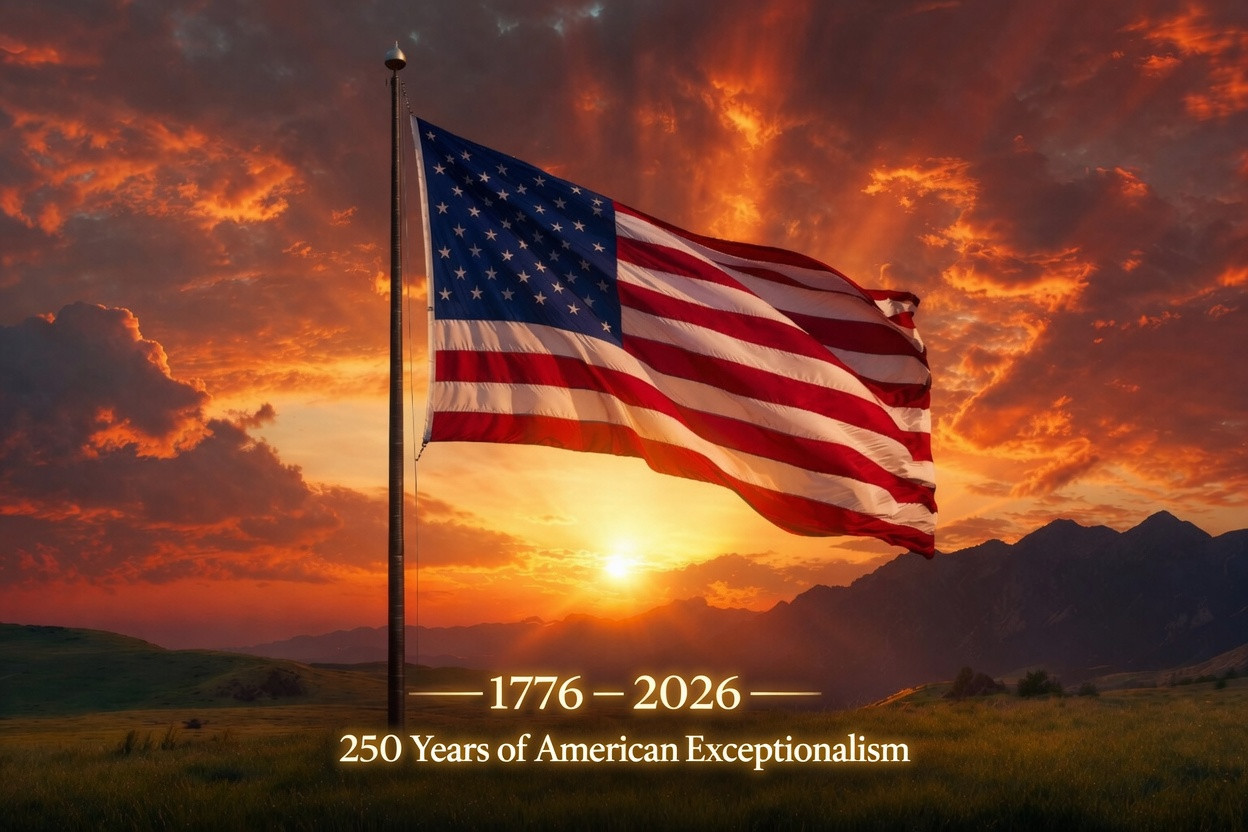
On July 4, 2026, the United States marks the 250th anniversary of the Declaration of Independence. Two hundred and fifty years ago, a group of colonists dared to declare that governments derive their just powers from the consent of the governed and that all men are created equal, endowed with unalienable rights to life, liberty, and the pursuit of happiness. That document was not a finished product but a radical promise. On this semi-quincentennial, we can honor that promise without pretending the road to it has been flawless.
America’s story contains undeniable failures. Slavery contradicted the very creed of the founding, displacement of native peoples, and costly foreign entanglements all mark chapters we would rather rewrite. These are profound footnotes in our history not in step with the ideals announced in 1776. Yet what distinguishes the American experiment is not the absence of sin but the stubborn insistence on confronting and correcting it. The Civil War ended slavery. Constitutional amendments expanded the circle of “We the People.” Each generation has been forced, often painfully, to measure itself against the standard set in Philadelphia. That capacity for self-correction is itself part of what makes the country exceptional.
At the heart of this capacity lies the rule of law, not social justice. The Founders designed a system in which no individual, no matter how powerful, stands above the law. Independent courts, due process, protections against arbitrary government action, and the principle of equality before the law were radical breaks from the monarchies and empires of the era. Sometimes it seems we haven’t always lived up to the ideals given us, but the system has self-corrected when necessary. This framework has repeatedly reined in excess and enabled reform. The rule of law is imperfect and often strained, but its endurance makes possible the peaceful transfer of power and the gradual expansion of rights that define the American story.
American Exceptionalism rests on several interlocking realities that remain visible even after 250 years.
First, we need to consider the political architecture of our country. Though today we’re really talking about the Declaration of Independence, we need to bring into discussion the Constitution. It created a durable republic with separated powers, federalism, and regular elections, anchored by the rule of law. No other large nation has operated under the same fundamental law for so long while peacefully transferring power dozens of times. The system was designed for imperfect people; its survival through civil war, depression, and world war testifies to its resilience.
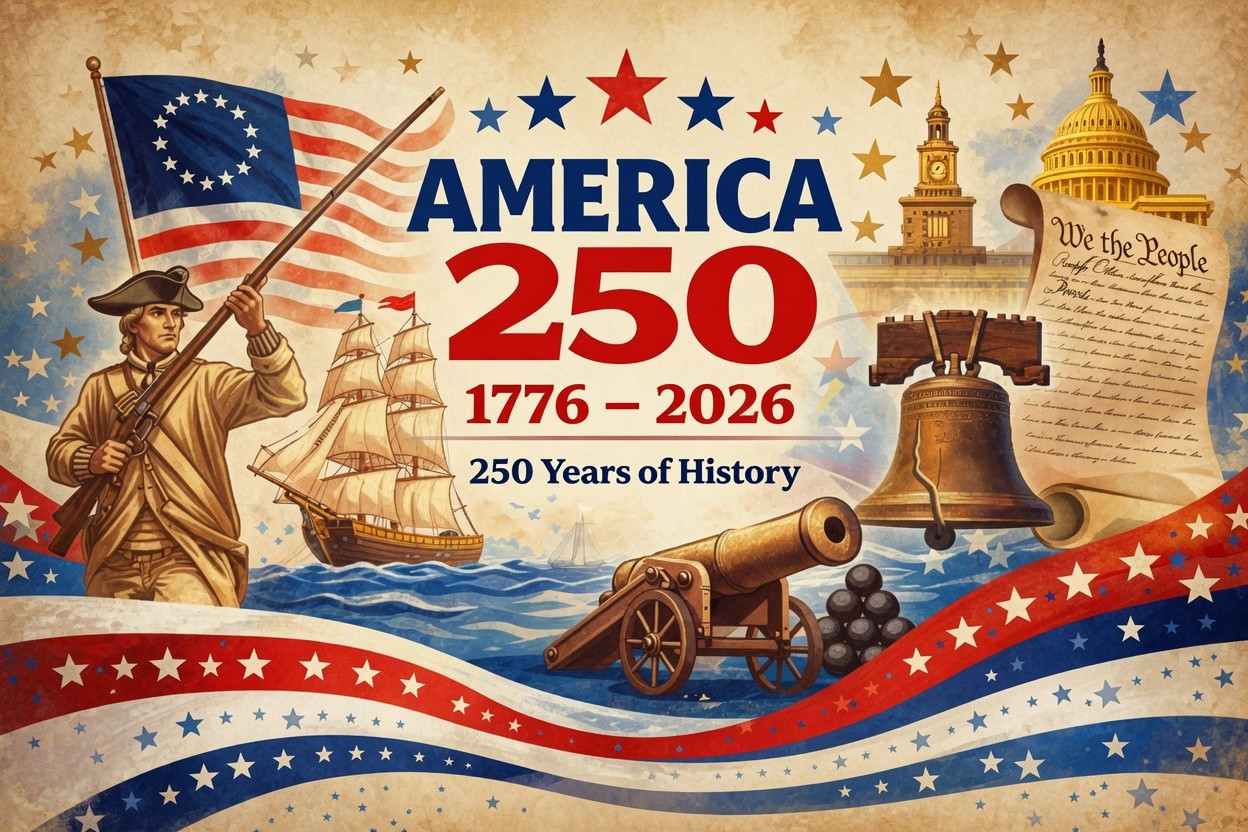
Third is our culture of innovation and reinvention. From the steam engine improvements and interchangeable parts of the early republic to electricity, automobiles, aviation, computing, the internet, and biotechnology, Americans have repeatedly turned ideas into reality. It is the energy that settled a continent, also placed humans on the Moon and created the tools that now connect billions. That inventive tradition continues in laboratories, garages, and startups today.
Fourth is our aspirational role on the world stage. For all its mistakes, the United States has been, at critical moments, an arsenal of freedom and a magnet for those seeking liberty. The defeat of fascism and the long contest with Soviet communism were not solely American victories, yet American power and purpose were indispensable. Countless people around the globe still look to American institutions, culture, and markets as reference points for what self-government and prosperity can look like.
None of this erases the real work that remains. Deep polarization and institutional distrust are pressing challenges right now. Yet the very framework that allows us to openly debate these problems-free speech, a free press, competitive elections, and the rule of law-is itself a testament to the durability of the American experiment. Many today question whether these pillars still stand. That skepticism is healthy and part of the tradition. Other nations have copied pieces of the American model; few have ever replicated the full combination of constitutional restraint, economic openness, and individual agency that has defined our exceptional journey.
On this 250th Fourth of July, the most fitting tribute is not reflexive celebration or reflexive condemnation. It is a renewed commitment to the unfinished work. The Declaration’s truths were “self-evident” in theory; making them evident in practice has been, and remains, the distinctly American project. Two hundred and fifty years in, the experiment continues, not because we have achieved perfection, but because most of us still believe the promise is worth striving toward. That belief, tested and tempered by history, is the core of American Exceptionalism worth carrying forward.
Giving thanks for the providence that has carried this republic through 250 years-Happy 250th!
#GodBlessAmerica #America250 #July4th2026 #IndependenceDay#AmericanExceptionalism #RuleOfLaw #FoundingPrinciples #Patriots