Lexington & Concord, April 19, 1775

In the days leading up to July 4, I’m sharing a brief trilogy of events that helped set the stage for American independence in 1776. This is the last of the three.

A little over 250 years ago, on April 19, 1775, the American Revolution began at sunrise on Lexington Green in Massachusetts.

Paul Revere’s midnight ride had delivered the warning, more on this later as a note.  Seventy-seven farmers and tradesmen, led by Captain John Parker, a veteran of the French & Indian War, almost on his deathbed, stood in the path of 700 British Regulars.

Parker is credited with two historical expressions. The first, he ordered, “Stand your ground.”  The second, “Don’t fire unless fired upon. But if they mean to have a war, let it begin here.”

A single shot rang out. The fact is nobody knows who fired first. By nightfall the British were in full retreat, chased 17 miles back to Boston by ordinary colonists who had become an armed fighting force in a single day. 

An important thing is to look at it as three separate, but continuous battles. By the end, the British, with reinforcements, grew to about 1,700. The colonists numbered 77. By the end of the day, the number grew to close to 4,000. When I say three separate battles; Lexington Green at dawn, Concord’s North Bridge, and the running retreat, At Concord’s North Bridge, the militia fired the “shot heard round the world.” Total casualties for the day were as follows: Colonists: 49 killed, 39-41 wounded, and five missing. For the British: 73 killed, 174 wounded, 26–53 missing/captured.

Let’s clear up what may be some misconceptions. Paul Revere did not shout, “The British Are Coming” or “The Redcoats Are Coming.” British soldiers were referred to as “Regulars.” All evidence shows what he actually said was, “The Regulars are coming out!”

“The British are coming!” phrase first appeared almost 50 years later, by John Hancock’s fiancée, Dorothy Scott. 

“The shot heard round the world comes from a poem written by Ralph Waldo Emerson called the Concord. Hymn.  Some background here. The shot was first coined by Ralph Waldo Emerson’s famous line in the Concord Hymn in 1837 specifically refers to the American volley at Concord’s North Bridge, not the earlier shot at Lexington Green: 

“By the rude bridge that arched the flood,

Their flag to April’s breeze unfurled,

Here once the embattled farmers stood

And fired the shot heard round the world.”

Finally, there is a difference between militiamen and minutemen. Both were part of the colonial citizen-soldier system in 1775. We often hear of minutemen but, their numbers were lesser than militiamen, kind of. Minutemen were part of the militia, but more elite, more physically fit, and younger. 

This may sound crude in today’s world because it’s no longer true but if you’re old enough, you may remember some men in your county sheriff’s department appearing heavier and not in shape and contrast it with the State Highway Patrol. Both are part of law enforcement (militia) with the State Highway being more elite (minutemen).

They were not soldiers. They were farmers, tradesmen, and teenagers who decided they would rather die on their feet than live on their knees. And they changed the world

The Battle of Point Pleasant- October 10, 1774

In the days leading up to July 4, I’m sharing a brief trilogy of events that helped set the for American Independence in 1776. This is the second of three.

My guess is many have not heard of this battle and for some the tie to the Revolutionary War is tenuous, but I’ll try to piece it together. Whether I do or not, many West Virginians claim the battle was the first shot fired for the fight for independence. My interest comes from family reunions on Frazier Mountain close to Nitro, West Virginia. Plus, I’ve always loved history, 

So, about six months before Lexington and Concord, more associated with the beginning of the revolution, the first real blood of the coming war was shed on the banks of the Ohio and Kanawha Rivers at Point Pleasant in what is now West Virginia. 

More than a thousand Virginia (West Virginia wouldn’t exist as a state until about 90 years later during the Civil War) militiamen had camped at the Point, a narrow spit of land where the two rivers meet. At dawn, they were attacked by roughly 700–1,000 Shawnee and Mingo warriors led by the Shawnee Chief Cornstalk. As an aside, during the French and Indian War, Cornstalk fought with the French against the British. During the Revolution, he fought with the British against the colonists. 

The fighting was brutal and lasted most of the day. It was often hand-to-hand. The Virginians held their ground against repeated charges, finally driving the warriors back across the Ohio River. In fact, the Virginians suffered staggering losses, probably more than the combined forces of the Mingo/Shawnees. The Virginia militia suffered 215 total casualties, 75 killed and 140 wounded. There are no reliable sources of Mingo/Shawnee losses, but estimates range from 60-100 killed. For Virginia, the numbers may not seem large, but those casualties represented about 20% of the total number of militia in one day. 

Some West Virginians have long claimed this was the true first battle of the American Revolution. British Royal Governor Lord Dunmore was accused of encouraging, or at least failing to restrain, the tribes in order to weaken the frontier colonies. That cannot be proven as true. But keep it in mind. Dunmore had British regulars available for what was known as Dunmore’s War but held this to be a local matter. In fact, the entire Dunmore’s War, including the Battle of Point Pleasant, was fought solely by American colonial militia with no British regulars involved. 

Dunmore’s War and Point Pleasant were like a “warm-up” conflict on the frontier. It trained many future Revolutionary soldiers, secured the western border temporarily, and occurred right on the eve of the war for independence. It gave Americans combat experience against irregular warfare, knowledge of fighting in woods and rough terrain, and a strong independent spirit. Many of the Virginia militia joined the Continental Army, and Dunmore earned the scorn of colonists. 

Today a granite monument and museum stand at the battlefield in Point Pleasant. For those whose families have roots in the Ohio Valley, It was not yet the Revolution. But it was the sound of America realizing it would have to fight.


The Boston Massacre – March 5, 1770

In the days leading up to July 4, I’m sharing a brief trilogy of events that helped set the stage for American independence in 1776. This is the first.


The Boston Massacre – March 5, 1770

Five men were shot and killed in Boston.

A crowd of angry Bostonians had been taunting a small squad of British soldiers, pelting them with snowballs, rocks, and throwing in some insults. In the chaos and, probably fear, the soldiers fired into the crowd. It’s not Black History month, nor does it need to be, but Crispus Attucks, a black sailor, is determined to be the first to fall dead. The city erupted in outrage.

The British soldiers were arrested and charged with murder.

Then it gets interesting. In a time when mob justice would have been easy, one man, an attorney, stepped in to defend them. John Adams, a rising patriot lawyer and cousin of Samuel Adams, a patriot as well, and a bit of a rabble rouser, a leader of the Boston Tea Party.

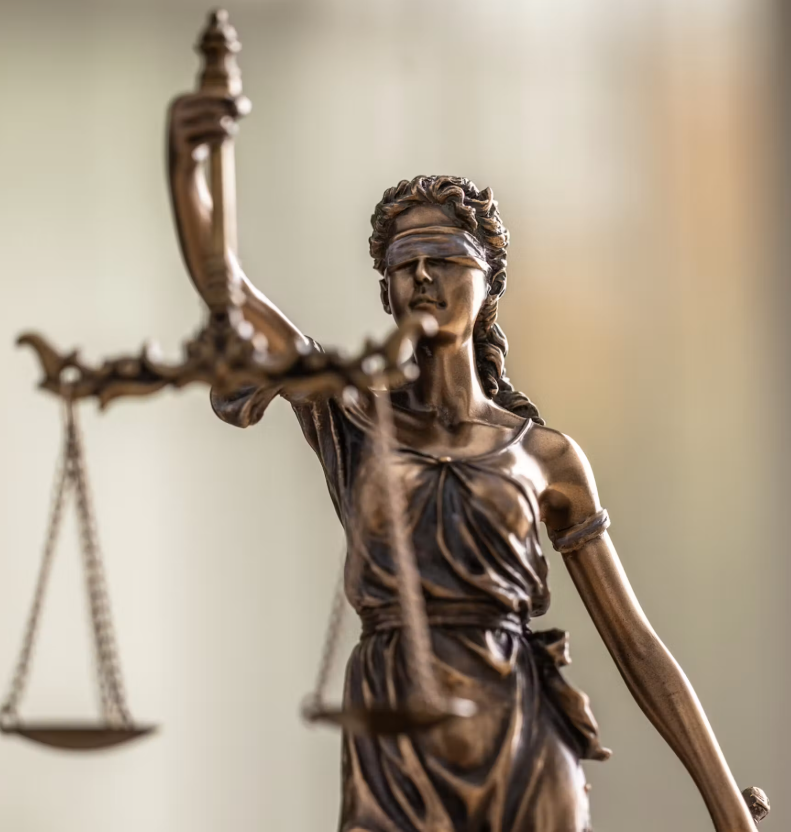
The story is Sam asked cousin John to defend the soldiers This raises a question in my mind but, John Adams took the unpopular case. He believed that if the American cause was to be just, it must rest on the rule of law, even for British soldiers. In a powerful closing argument, he told the jury that facts, not passion, must decide the matter. It’s still supposed to work that, except today on social media. and in some court cases, people are left wondering.

Anyway, the result stunned people.  Six of the soldiers were acquitted. Two were convicted of the lesser charge of manslaughter.

John Adams later called it “one of the most gallant, generous, manly and disinterested actions of my whole life.” It cost him clients and popularity in the short term,  but it strengthened the moral foundation of the patriot cause.

How did Sam feel? Well, he wanted cousin John because he wanted the soldiers to have a good defense. The only thing I know he wasn’t expecting it, so probably not pleased. He was hoping for a guilty verdict.

By the way, here’s something interesting, but it makes no sense to me. The two found guilty faced the death penalty but they “prayed clergy,” a legal loophole that allowed first‑time offenders to avoid execution by demonstrating literacy in a biblical verse, that meant being able to read one. It was reserved for members of the clergy initially but expanded. Once accepted, the court commuted their sentence to branding with a hot iron, marking the letter M for manslaughter or murder on the thumb. In other words, on a first offense, you’d escape the death penalty if literate enough to read a Bible. Fail and you get hanged. 

This was five years before Lexington, the topic of the third of these. So, the rule of law principle was tested; a free people must be governed by law, not vengeance.

[As an aside, the Boston Massacre (March 5, 1770) and Kent State (May 4, 1970) are almost exactly 200 years apart, and a parallel has been drawn by many writers over time. It’s a powerful one if framed as both involving government forces firing on civilians, both becoming instant propaganda symbols, and both raising questions about authority, protest, and lethal force. I reject the idea of similarity. I’ve written in detail about Kent State every May 4th for years, but I stopped writing about it with my last one, vowing to never again write about it. But I believe there are differences.]

What Fear of the Lord Really Means

Proverbs 1:7 says, “The fear of the LORD is the beginning of knowledge,” but that word fear is one that many people misunderstand. We hear it and think of dread, punishment, or shrinking back. But in Scripture, the word carries a very different meaning. The fear of the LORD is not terror. It is reverence, the deep awareness of God’s greatness, holiness, and wisdom. It is the recognition that God is not an idea or a tradition but the God who designed life itself. When a person sees God clearly, with humility and awe, that posture becomes the foundation for everything else. 

Reverence is the foundation for building respect, trust, humility, and wisdom. Proverbs calls this the beginning of knowledge because you cannot understand life until you begin with the One who created it. You cannot make sense of the world until you acknowledge the God who shaped it. Reverence opens the door to wisdom. It steadies the heart. It teaches us how to live.

Those who reject God’s wisdom and resist the guidance do so not out of ignorance, but because they choose to build life on their own understanding. Devotion is the opposite of that. It is the posture that says, God, You know more than I do. Teach me. It is the willingness to be shaped, corrected, and guided by the One who sees the whole picture. 

When Scripture speaks of fearing the LORD, it describes a relationship built on awe, humility, and trust, not on anxiety or dread. It is the kind of fear that draws a person closer, not the kind that pushes them away. And that is where knowledge truly begins.

Freedom 250: When Celebrating America Became ‘Too Partisan’

Ten blue states sit out the 250th anniversary while the rest of America celebrates.

Ten states, all with Democrat governors, are officially opting out of the Freedom 250 celebration. Some talked of partisanship, others of budget constraints. More on this later.

Opting out means no state funding, no official state staff or government delegation, and no official state pavilion managed by the state government. However, local governments, counties, cities, businesses, nonprofits, or private individuals from those states can still participate independently, and no doubt will.

In Washington, D.C., the Great American State Fair takes place with themes of Land & Prosperity, Military & Veterans, Faith/Values/Inspiration, Innovation & Technology, Horsepower of America, Wings of Freedom, etc. There will be exhibits from states and territories, Rodeo 250, entertainment, military flyovers, rides, and on July 4th, what organizers are calling the biggest fireworks display ever.

The D.C. fair is the flagship, but the fullness is the decentralized celebrations happening in towns and cities everywhere. Across the country, celebrations will have similar activities. Some of the festivities will continue throughout the year at state and local fairs. One big July 4 benefit show in Los Angeles with major artists, jazz festivals, and music events because, surprise, surprise, California didn’t opt out.

Let’s get back to partisanship. Recent polling, Gallup in 2025 show only 29–36% of Democrats say they’re “extremely/very proud” to be American (down sharply from prior years), versus 85–92% of Republicans. The idea of celebrating America shouldn’t be partisan. But perception is, amplified by media, leadership, and the deep emotional/cultural split in how Americans experience national identity right now. That’s why some blue-state governors cited “partisan” concerns. 

Oregon’s partisan concerns centered on the event feeling too closely tied to President Trump and shifting away from a neutral, bipartisan tone. To me, I see it as TDS to an extreme. We’re celebrating an event, not a person. The 250th anniversary and the Declaration of Independence belongs to the country, not any one politician. Celebrating the founding document, the principles in it; life, liberty, pursuit of happiness, and 250 years of American history should be something transcending whoever happens to be in the White House. Framing participation as “endorsing Trump” instead of endorsing America comes across as overly tribal or childish. 

Fireworks over American flag, "God Bless America!Polls and public reaction suggest it’s not playing well broadly. A large chunk of the country, including many independents and moderates sees national birthday celebrations as something you rise above politics for, especially one this rare. Opting out reinforces the narrative that one side, democrats, struggles with uncomplicated patriotism right now.

Whether you call it TDS (I did earlier), affective polarization, or just “everything is about Trump now,” the pattern is the same: events, symbols, or policies get judged less on content and more on who’s associated with them. A state fair with rodeos, flyovers, Ferris wheels, and state exhibits celebrating American achievements shouldn’t be controversial, but here we are.

It is sad for social cohesion. Shared national milestones used to be rare moments that cut across divides. The fact that pride in America itself now shows one of the widest partisan gaps in decades makes bridging that harder. Hopefully the actual event on the ground brings in plenty of regular Americans from all backgrounds who just want to enjoy it. If democrats choose to say home, although welcome, so be it. When it comes to optics, democrats don’t seem to do well, but don’t seem to care. 

Another issue coming is one of national pride, mentioned earlier. Conservatives emphasize American exceptionalism, founding principles, military strength, and unapologetic pride. Progressives prioritize acknowledging historical flaws such as slavery, inequality, indigenous issues, etc.  

Consider this though; most countries are proud of themselves; that’s normal and healthy. France celebrates Bastille Day, Mexico its independence, Japan its culture and history, India its own founding. National pride doesn’t require claiming perfection; it means valuing what your country stands for and has achieved while working to improve it. That’s natural too. The Declaration itself is a bold assertion of universal rights and a list of grievances against Britain. It’s aspirational, not self-congratulatory. The Founders never claimed perfection. In the Constitution’s Preamble, just eleven years later, “We the People… in Order to form a more perfect Union.” The founders knew the country wasn’t perfect in 1776 or 1787, so they built in mechanisms for change precisely because of that. 

Let’s get back to partisanship. Recent polling, Gallup in 2025, shows only 29–36% of Democrats say they’re “extremely/very proud” to be American (down sharply from prior years), versus 85–92% of Republicans. The idea of celebrating America shouldn’t be partisan. But perception is amplified by media, leadership, and the deep emotional/cultural split in how Americans experience national identity right now. That’s why some blue-state governors cited “partisan” concerns.

Oregon’s partisan concerns centered on the event feeling too closely tied to President Trump and shifting away from a neutral, bipartisan tone. To me, I see it as TDS to an extreme. We’re celebrating an event, not a person. The 250th anniversary and the Declaration of Independence belong to the country, not any one politician. Celebrating the founding document, the principles in it—life, liberty, pursuit of happiness—and 250 years of American history should be something transcending whoever happens to be in the White House. Framing participation as “endorsing Trump” instead of endorsing America comes across as overly tribal or childish.

Polls and public reaction suggest it’s not playing well broadly. A large chunk of the country, including many independents and moderates, sees national birthday celebrations as something you rise above politics for, especially one this rare. Opting out reinforces the narrative that one side, Democrats, struggles with uncomplicated patriotism right now.

Whether you call it TDS (I did earlier), affective polarization, or just “everything is about Trump now,” the pattern is the same: events, symbols, or policies get judged less on content and more on who’s associated with them. A state fair with rodeos, flyovers, Ferris wheels, and state exhibits celebrating American achievements shouldn’t be controversial, but here we are.


It’s sad for social cohesion. Shared national milestones used to be rare moments that cut across divides. The fact that pride in America itself now shows one of the widest partisan gaps in decades makes bridging that harder. Hopefully the actual event on the ground brings in plenty of regular Americans from all backgrounds who just want to enjoy it. If Democrats choose to stay home, although they are welcome, so be it. When it comes to optics, Democrats don’t seem to do well, but don’t seem to care.

Another issue coming is one of national pride, mentioned earlier. Conservatives emphasize American exceptionalism, founding principles, military strength, and unapologetic pride. Progressives prioritize acknowledging historical flaws such as slavery, inequality, indigenous issues, etc.

Consider this though: most countries are proud of themselves; that’s normal and healthy. France celebrates Bastille Day, Mexico its independence, Japan its culture and history, India its own founding. National pride doesn’t require claiming perfection; it means valuing what your country stands for and has achieved while working to improve it. That’s natural too. The Declaration itself is a bold assertion of universal rights and a list of grievances against Britain. It’s aspirational, not self-congratulatory. The Founders never claimed perfection. In the Constitution’s Preamble, just eleven years later: “We the People… in Order to form a more perfect Union.” The founders knew the country wasn’t perfect in 1776 or 1787, so they built in mechanisms for change precisely because of that.
In the end, a milestone like America’s 250th anniversary should be a time when we set politics aside and celebrate the country we share. National pride doesn’t mean pretending we’re perfect — it means appreciating what we’ve built and continuing to make it better. Hopefully more Americans, regardless of party, will choose to join the celebration in their own way.