World War I
The war to end all wars
Another reason is that this is another year my town is not having a parade or, to my knowledge, a public program. I hear the school is having some vets in to speak, and that’s a good thing, but the schools really don’t teach civics anymore, which was required when I was a kid. But things were different. Our dads were WWII veterans. The country hated communism then. I mention this because Mamdani won the youth vote overwhelmingly.
Schools don’t teach the failures of communism. It’s been glorified, which leads to my final reason for writing. Earlier today, I posted a story about a disclaimer: “The Anchorage School District does not endorse these materials or the viewpoints expressed in them.” Earlier this month, the ASD added a disclaimer sticker to physical copies of the U.S. Constitution and Declaration of Independence used in classrooms and libraries. What the hell does that teach our kids? Okay, let’s get on with this.
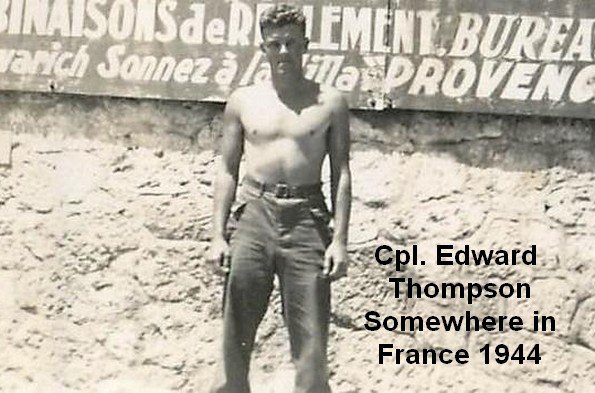
Another benefit is that, as the author, I get to choose the pictures to attach, and I have. The second is my dad, Cpl. Edward Thompson, somewhere in France during World War II. The other is my uncle, Kenny, taken in 1966 after he completed basic training.
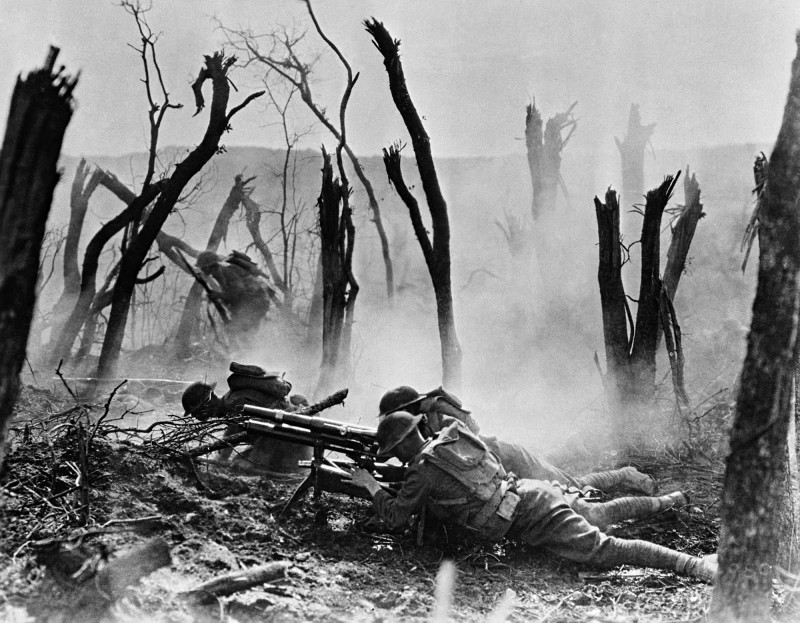
Today is not Veterans Day, but here’s a little background on the upcoming holiday. At the time, it was referred to in various ways—but never as World War I. That designation came later with the advent of World War II. Initially, it was known as The Great War. History shows that the end of what is now known as World War I set the stage for the next; the peace terms were so harsh that a second global conflict became almost inevitable.
Approximately 9 million soldiers died during World War I, and civilian deaths are estimated between 5 and 13 million. Consider this: civilians perished due to famine, disease, and direct military actions. The connection between World War I and the 1918 flu epidemic is clear—the war created ideal conditions for the virus to mutate and spread.
The epidemic, often called the Spanish flu, claimed the lives of up to 100 million people worldwide. Suddenly, the total death toll from this era could be said to reach 120 million, nearly one in ten people on the planet.
Technically, there was no surrender, but rather an armistice signed at the 11th hour of the 11th day of the 11th month in 1918. If you’re older, you may remember commemorating Armistice Day each November 11, before it became Veterans Day. At my school, we observed a moment of silence at 11:00 a.m.
Call it what you will, the net effect was a surrender, and the terms imposed on Germany were severe. Despite the staggering loss of life, I’m not sure the world learned much from the bloody fighting between 1914 and 1918. The fighting ceased on November 11, 1918. However, the war officially ended with the Treaty of Versailles, signed in 1919 and taking effect the following January. It’s confusing, but the cessation of hostilities is recognized on November 11 as Armistice Day, now Veterans Day.
World War I was back in the news in 2018, at least in my mind. President Trump proposed a large military parade. Critics mocked the idea, calling it “Trump’s Parade.“ There had been at least two such parades in earlier times. Due to cost concerns, President Trump canceled it. Don’t confuse it with what pundits called the “Trump Birthday Parade.”
I supported the idea in 2018, not as a political endorsement, but because it marked the 100th anniversary of the war’s end. While it didn’t achieve the goal of ending all wars, a fact made clear less than 21 years later, we let political division overshadow a historical moment that could have taught us something. Guess what, we have something called Trump Derangement Syndrome, keeping us divided.
History is always important, yet it is often overlooked. We all know the quote, stated in various ways by different people: “Those who cannot remember the past are condemned to repeat it.“ In other words, learn history, or keep making the same mistakes.
By the way, I believe it’s wrong to say “Happy Memorial Day.” It’s okay to say “Happy Veterans Day,“ but if you see a veteran tomorrow, “Thank you for your service“ is the best way to express your gratitude.
Veterans come in all shapes, both sexes, and all races. Those still with us fought on the front lines in Okinawa, the Battle of the Bulge, Anzio, the Chosin Reservoir, Khe Sanh, Hue, Firebase Ripcord, Grenada, Panama, Kuwait, Baghdad, Kandahar, Fallujah, the Battle of Do Ab—and the list goes on. We still have soldiers stationed around the world. Americans have stood guard over the rest of the world.
Today is not just for combat veterans, it’s for all veterans. Many people think first of those on the front lines, but it takes more than combat troops to make an army. All who wear the uniform are important. All are at risk.
Veterans come from diverse backgrounds. They are parents, children, grandparents, brothers, and sisters-all charged with the duty of keeping us safe.
So when you see a veteran, not just on Veterans Day, but any day, say, “Thank you for your service, and for keeping me safe and free.” And teach your children and others, at a minimum, about American history, capitalism vs communism, western civilization, civics, and expose them to God. Our survival depends on it.