Armistice Day is a concept many people today might not fully grasp, but it is the original foundation of Veterans Day. Before its name was changed in 1954, people honored Armistice Day out of habit to commemorate the end of World War I, the Conflict once hailed as the war to end all wars. The holiday was held every year on November 11th, briefly shifted to another date, and then returned to its traditional spot.
Growing up after being born in 1952, school rituals on November 11th meant observing a quiet moment of reflection on the eleventh day of the eleventh month, sometimes even at the eleventh minute. As a young child, the true depth of the ritual was hard to comprehend. Families would buy red crepe paper poppies made by veterans to wear on shirt buttonholes, complete with tags referencing groups like the American Legion or the Veterans of Foreign Wars. Fathers who served in these organizations often passed along the tradition, even if the young kids did not fully understand the heavy history behind it.
The idea that World War I would be the final conflict quickly proved false as the world entered World War II and the Korean War. Recognizing the need to honor service members from every era, the observance was officially changed to Veterans Day on November 11, 1954. Key traditions remained, such as the moment of silence and the red poppies. The symbolic flowers had been popularized by the British starting in 1921, inspired by the famous 1915 poem In Flanders Fields, which famously pictures red poppies blowing between the crosses in row on row.
A brief shift occurred in 1968 when federal legislation moved Veterans Day to the fourth Thursday of October to create a long weekend for public employees. The change proved unpopular, leading officials to restore the holiday to its proper November 11th date by 1975.
Technically, the conflict in 1918 ended with an armistice rather than an official surrender at the eleventh hour of the eleventh day of the eleventh month. For those who remember gathering in classrooms at 11:00 AM on November 11th, this timeline explains the origin of the tradition.
While the armistice functioned as a practical surrender, the harsh terms imposed on Germany led many historians to believe the agreement made a second world war almost inevitable.
Nothing seemed to be learned from the immense loss of life between 1914 and 1918. Just two decades later, humanity entered an even deadlier global conflict that claimed roughly twenty-five million military lives and up to forty million civilian lives.
The timeline of how World War I concluded remains an interesting detail. A ceasefire began in 1918, but the formal end came with the Treaty of Versailles, signed in June 1919 and taking effect in January 1920. Deciding when the official centennial occurred depends on personal interpretation, though falling back on the armistice date of 1918 remains a common preference.
Humanity failed to achieve a lasting peace because hatred and political division overshadowed the critical lessons of history. A proposal in 2018 for a centennial military parade faced strong public pushback, yet military parades in Washington D.C. have historical precedent, including events under Franklin Roosevelt during World War II and John Kennedy, whose parade famously featured missiles reminiscent of Soviet displays.
An appreciation for military history often goes hand in hand with a weariness of war itself. A generation born during the Korean War has witnessed a continuous cycle of conflict: the prolonged war in Vietnam; engagements in Grenada and other interventions in the 1960s, 1970s, and 1980s; missile strikes in the 1990s and into the early 21st century; the long-running War on Terror; and now a conflict with Iran. Born in 1952, I have lived through a hot war for most of my life, not to mention a cold one that kept the world on the brink.
History holds immense value, yet it is frequently ignored. The well-known phrase reminds us that those who cannot remember the past are condemned to repeat it. Failing to learn from historical mistakes guarantees they will happen again, a principle that applies to conflict and human choices alike.
This doesn’t take away from our appreciation of those in the military prepared at all times to defend us.
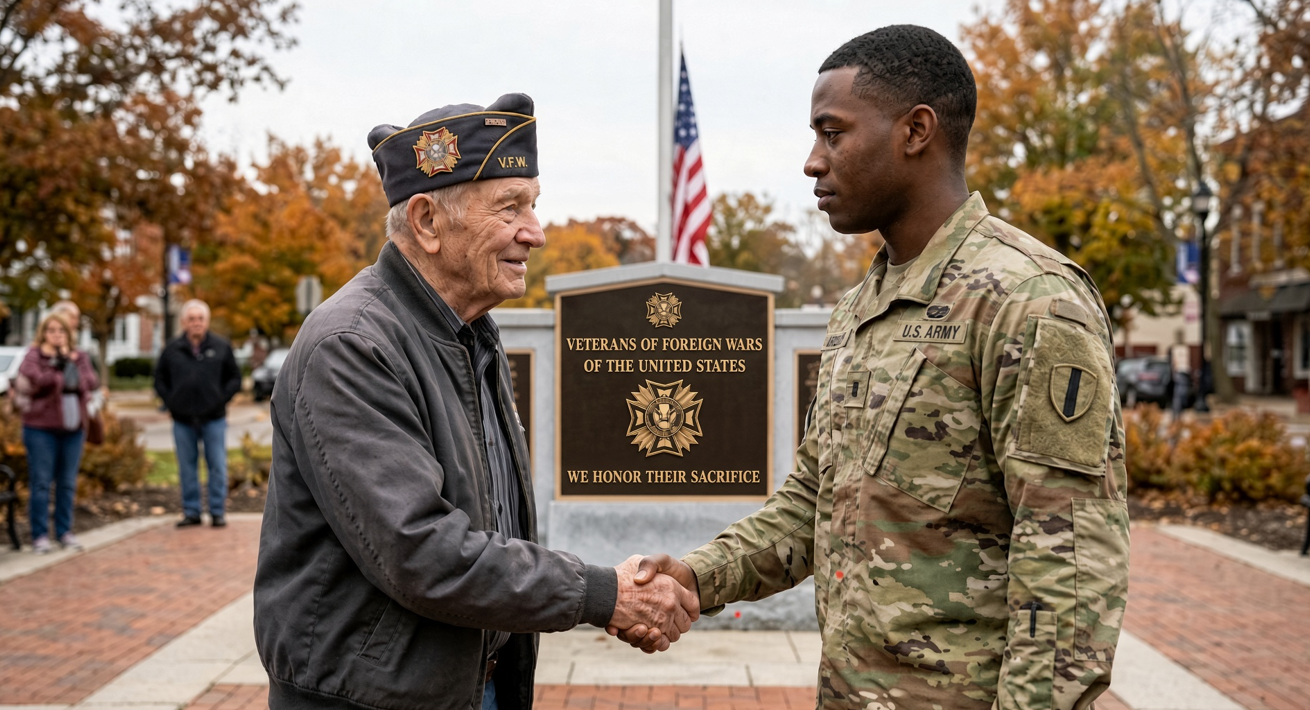
After reflecting on this history, taking a moment to go thank a veteran is the best next step.